AI in Software Development: Code Faster and Automate Testing
Artificial intelligence is now an established tool in software development, integrated directly into the programming environment. Developers spend less time writing boilerplate code and can instead focus on how the different parts of an application logically interact.


AI Software Development: Key Takeaways
- Development Speed: AI tools take over writing frequently repeated standard code, significantly reducing the time from the initial feature idea to release in the live system.
- Code Quality: Through automated tests and AI error analysis, vulnerabilities are identified during programming, which increases the stability of the application and lowers later correction costs.
- Modernization: Existing legacy systems can be analyzed more easily and migrated to modern programming languages to open them up for new interfaces and features.
- Data Protection (nDSG): The use of AI complies with Swiss standards when data is processed in protected environments and your intellectual property (source code) remains entirely with you.
What benefits does software development with AI bring?
Using AI in software development leads to a considerable reduction in Time-to-Market, as generative AI models and automated agents take over time-intensive manual tasks such as writing standard code, creating test environments, and documentation.
Reducing Manually Written Boilerplate Code
In every software project there are large amounts of repetitive code that are necessary for the infrastructure, for example database schemas, API endpoints, or interface descriptions.
AI tools for software development analyze the project's existing context and suggest code blocks that fit exactly with the frameworks in use. The team validates the AI's suggestions. This can save several hours per working day that can be used differently.
Greater Software Stability and Proactive Testing
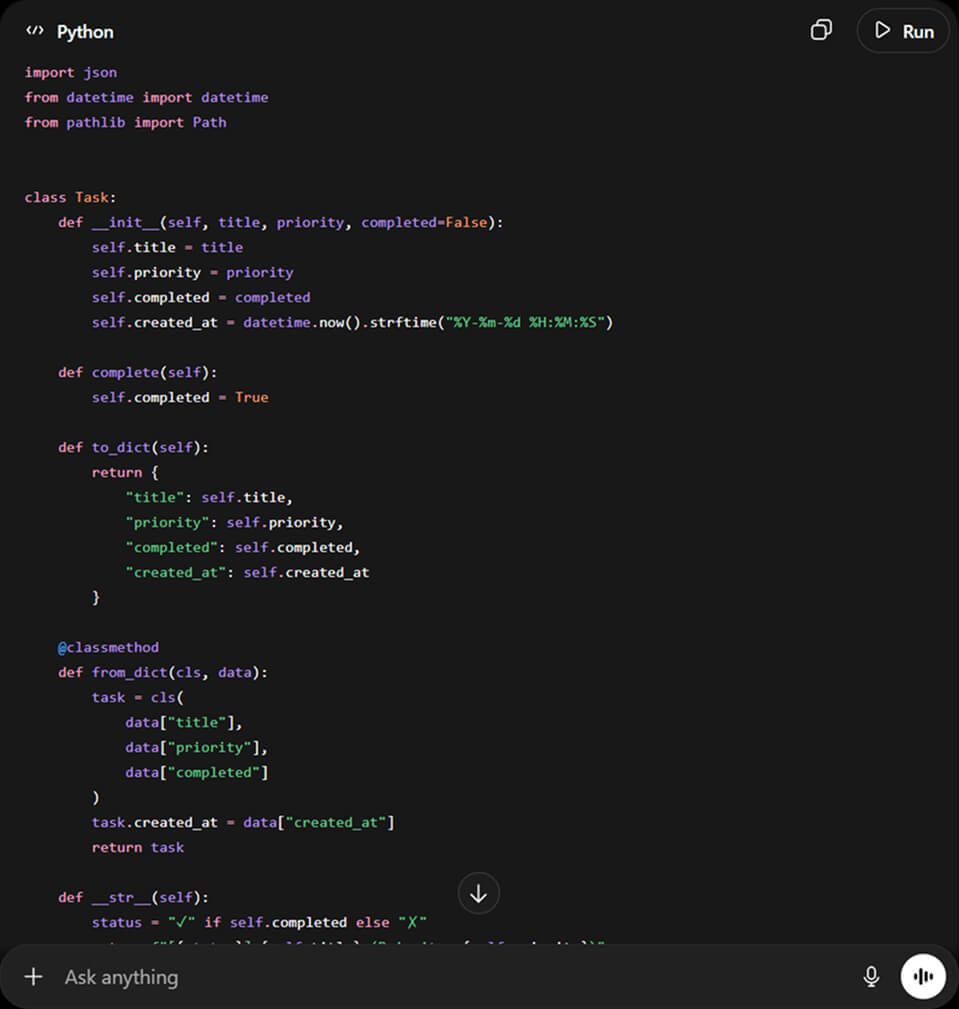
An important part of software development is writing tests (unit tests) that ensure new features do not break existing parts of the software.
AI models are able to quickly analyze the written code and automatically generate the appropriate test scenarios. In doing so, the AI identifies edge cases, that is, unusual user inputs that a human developer might have overlooked during manual testing. The result is a more robust application with significantly fewer errors in live operation.
Maintaining Maintainability through Automated Documentation
Software is often developed further over years by different people. When documentation is missing, "technical debt" arises that makes later changes extremely expensive.
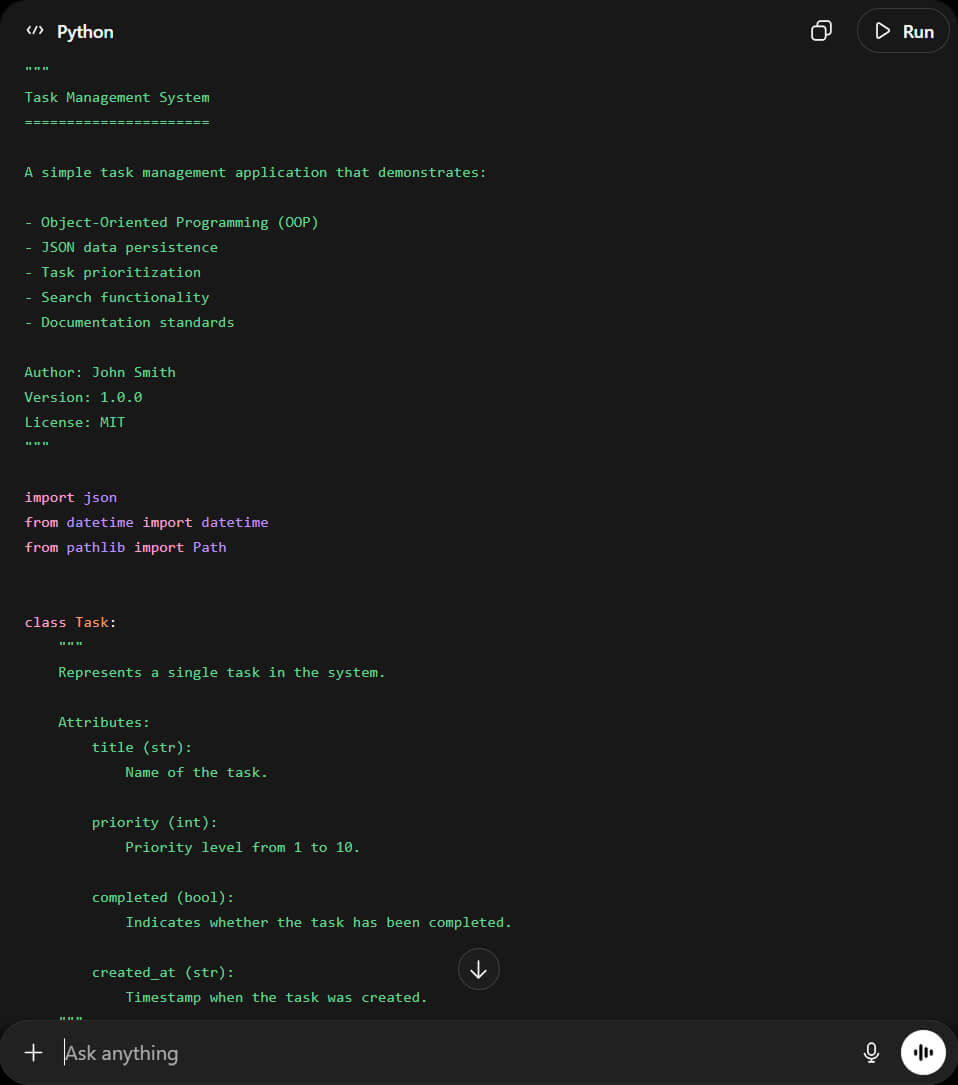
AI solves this problem by reading along with code changes as they are written and documenting, in natural language, what a particular function does exactly and how it interacts with other system components.
This approach ensures that knowledge about the software stays within the company and that new developers can be onboarded productively in days instead of weeks.
How do autonomous AI agents change the software development process?
Autonomous AI agents (agentic workflows) differ from conventional AI assistants in that they independently plan, execute, and correct complex programming tasks.
Unlike the code suggestions of an AI copilot, an agent can break a goal down into subtasks, write the necessary code, test it in the test environment, and independently make corrections in case of errors until the result meets the requirements.
Code Completion and Task Delegation through AI
Until now, developers had to initiate every line of code and have the AI complete it. Agentic systems now take over entire work packages. You only define the "what" (the goal), while the AI handles the "how" (the implementation).
This shifts the programmer's role toward a supervisory instance (reviewer) that oversees the architecture instead of spending time on the syntax of individual functions. Software projects are thus accelerated overall.
Self-Healing Systems through Feedback Loops
A key characteristic of autonomous agents is the ability to self-correct. If a generated code section runs into an error, the process does not abort. The agent analyzes the error message from the compiler or the test system, looks for the cause in the source code, and starts a new attempt at a solution.
This closed loop reduces the number of manual correction cycles by human developers to nearly zero and ensures a smoother development flow (flow state).
Orchestrating Complex Refactoring Projects
When modernizing existing software (legacy code), agents show their greatest strength. They can analyze large amounts of interconnected files simultaneously, understand dependencies, and carry out structural changes consistently across the entire project.
Where a human would need days to safely adjust all affected parts of an old code base, an AI agent completes this transformation in a fraction of the time by systematically updating file by file according to predefined rules.
What architectural prerequisites must be met for AI software development?
The underlying software must be "AI-ready." Only when the architecture meets certain standards can AI agents specifically modernize or extend functions without triggering unpredictable chain reactions in the overall system.
- API-First Design: Every function of the software must be addressable via an interface. This allows the AI to use functions like "slots" and connect new logic without having to rebuild the entire source code in detail.
- Strict Modularization: By dividing the software into independent modules (e.g., microservices or domains), the AI receives a sharply defined context. This increases the accuracy of the generated code.
- Consistent Naming Conventions: A logical and uniform naming of variables, classes, and functions serves the AI as a "map." When the system follows these patterns, the AI can write new code that fits into the existing style.
- Automated CI/CD Pipelines: Since AI massively increases the pace of code creation, an automated build and deployment pipeline is necessary. Only then can AI-generated code be tested immediately in test environments and integrated without obstacles.
- Documentation Repository: AI models need access to current technical descriptions and requirements. Clean documentation "as code" ensures that the AI actually understands the intention behind a function.
How are data protection and IP protection ensured in AI software development?
The use of AI in software development must be strictly compatible with the Swiss Data Protection Act (nDSG) and the protection of intellectual property (IP). No data requiring protection or proprietary source code may be used to train public AI models. By using isolated instances within a cloud or locally hosted language models (private LLMs), data sovereignty remains entirely with the company.
- Use of Enterprise Models: Instead of public versions of ChatGPT or Copilot, enterprise solutions are used. These contractually guarantee that entered data (prompts) and code fragments are not used to train the base models and are deleted or stored in isolation after processing.
- Zero-Data-Retention Policies: When connecting AI interfaces (APIs), it is ensured that providers follow a "zero data retention" policy. This means that the data is only processed in memory and not stored permanently on the AI provider's servers.
- Code Anonymization before Transmission: Before code parts are sent to an AI for analysis, automated filters can remove or mask sensitive information such as API keys, passwords, or personal customer data.
- Legal Protection of Intellectual Property: Since copyright for AI-generated content is very complex, contractual provisions ensure that all work results, regardless of whether they were created by humans or with AI support, legally transfer in full to the ownership of the client.
- Local AI Instances (On-Premise): For especially sensitive projects, there is the option to run certain open-source models on your own servers in Switzerland.
Implementing AI Software Development with Experience
At Axisbits, we have already successfully delivered more than 100 software projects and support Swiss companies in integrating artificial intelligence into their software architecture and development processes.
As experts in custom software, we know the challenges that arise when modernizing legacy systems and introducing new AI workflows.
- Development of AI-Native applications
- Modernization of legacy systems
- Implementation of agentic workflows
- The highest standards for data protection consulting & compliance
- Prototyping & MVP
Wir schaffen leistungsstarke Plattformen und Websites für Startups, Scale-Ups und KMUs, von Konzept bis Go-Live.
We develop AI-native software and modernize your systems for AI. Get a free consultation now!
AI Software Development – Frequently Asked Questions and Answers
AI-generated code is secure when validated through automated testing procedures and human code reviews. While AI acts as a highly efficient design assistant, the ultimate responsibility for security and maintainability lies with experienced software architects. In fact, by using analysis tools, security vulnerabilities in AI suggestions can often be found even faster than in purely manually written code.
The legal situation is governed by contractual agreements between the client and the service provider. The service provider must ensure that all usage and exploitation rights to the finished source code are fully transferred to you.
No, provided the right infrastructure is chosen. For client projects, we exclusively use enterprise interfaces or local instances that contractually prohibit the use of data for training purposes. Your source code and business data remain in an isolated environment and do not enter the public data pool of AI providers.
AI doesn't replace developers; instead, it transforms their roles. Rather than spending time on repetitive programming, developers increasingly act as strategists and reviewers. AI makes it possible to compensate for the skilled labor shortage, by enabling the existing team to generate significantly more output with the same effort and complete more complex projects in less time.
More articles

Many teams experience Sprint Planning in one of two extreme ways: either as an endless meeting that drags on for three hours and still provides no clarity, or merely as a ticket-shuffling exercise in Jira that could just as easily have been handled via email. Neither of these approaches aligns with the true purpose of Sprint Planning.

According to the swissICT Digital Excellence Report, only 35 percent of Swiss companies are on track with their digital alignment. For 26 percent, there is significant need for action (Source: swissICT). Companies invest in tools, cloud services, and AI pilot projects without a plan that holds it all together. The result: fragmented system landscapes, duplicated work, and budgets that don't flow where they have the most impact. The right IT strategy is the answer to this.

According to the PwC report Digital Product Development 2025, so-called 'Digital Champions' – companies with a high level of digital maturity – are already expecting and achieving an efficiency increase of 31% and a 20% reduction in operating costs.