Guide: Create a proof of concept template and fill it out correctly
A proof of concept (PoC) proves or refutes the effectiveness of your idea. With the proof of concept template, you ensure that you cover all important points on the way to the idea review.

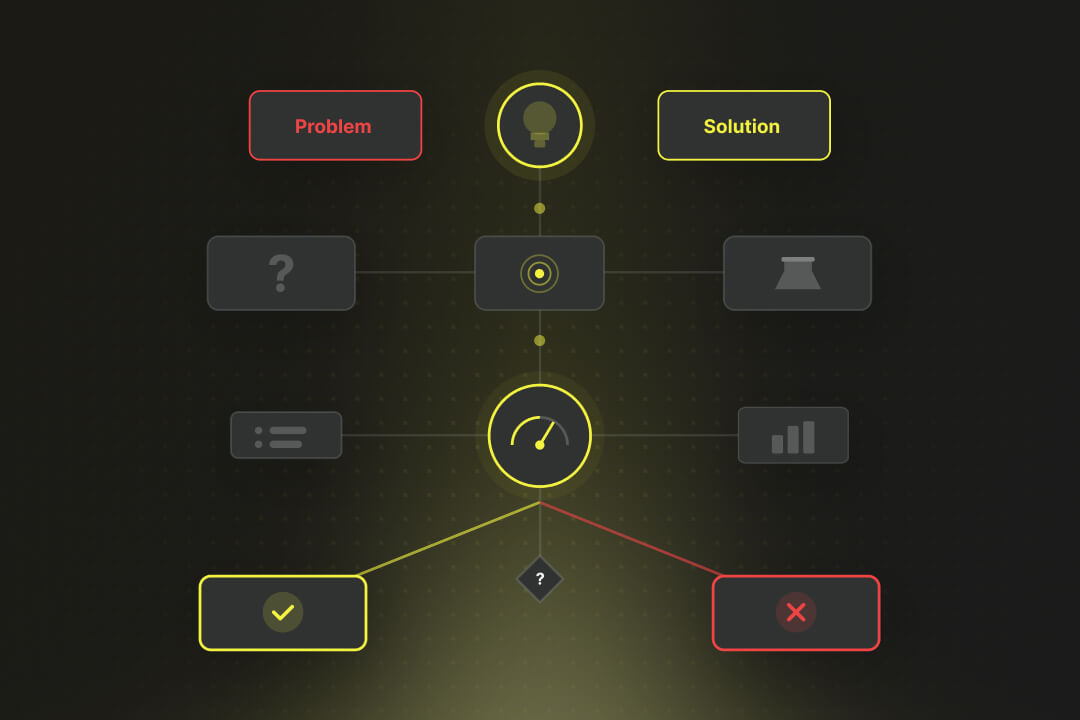
The most important facts about the proof of concept in brief
- A proof of concept (PoC) is a practical test, which shows whether an idea, technology, or approach works under real conditions.
- PoC, prototype and MVP pursue different goals: The PoC checks feasibility, the prototype makes functions tangible, the MVP tests market acceptance with a usable minimal version.
- One PoC template includes goal, problem definition, solution idea, measurable success criteria, resources, schedule, risks and results with recommendations for further action.
- A PoC is created in five steps: Define goal and problem, define success criteria, determine resources and time frames, set up and document the experiment, evaluate results and make a decision.
- A successful PoC is followed by an MVP, which tests real usage and market reactions with a minimal range of functions before further investments are made.
What is a proof of concept (PoC)?
A proof of concept (PoC), often referred to as Machbarkeitsnachweis in German, is a structured approach to test the feasibility of an idea, product, or technology. The aim is to test at an early stage whether a concept realistically works before major investments are made in development, marketing or scaling.
The PoC shows whether an idea is also viable in practice. This allows you to work out the weaknesses and convince investors, partners or internal decision makers.
Distinction: Proof of Concept vs. Prototype vs. MVP
The proof of concept is sometimes equated with a prototype or a minimum viable product (MVP). The three approaches pursue different goals:
What should a proof of concept template include?
A proof of concept (PoC) template contains everything that is necessary to assess the feasibility of an idea. This includes project goal, problem definition, solution idea, success criteria, resources, schedule, risks, and the results with the next steps.
- 1. Project goal: Describe what the proof of concept is intended to achieve.
- 2. Problem definition: Which specific problem should be solved and why is this problem relevant?
- 3. Solution idea, approach: Outline of the planned solution, technical or organizational approach.
- 4. Success criteria (KPIs): Definition of how success is measured, for example load time, test results, functionality.
- 5. Resources (team, budget, tools): Who is involved and what resources are available.
- 6. Timeline and milestones: Overview of the planned steps and deadlines for the individual phases.
- 7. Risks and Assumptions: Possible hurdles and assumptions that must be confirmed or refuted over the course of time.
- 8. Results & next steps: Documentation of results and recommendation as to whether the project should be continued, adjusted or stopped.
How do I create a proof of concept step by step?
You create a proof of concept by setting the goal, determining your success criteria, and defining a manageable framework with timeline and resources. Then you carry out the experiment and decide based on the results whether the idea will be pursued further.
Step 1: Create a justification
Be aware of why you want to carry out the proof of concept in the first place. What risks are you taking if you omit it? What resources, such as team, tools, and time, do you need?
Step 2: Define scope
Determine exactly what you want to test. Formulate clear goals and measurable success criteria (KPIs). Determine who is involved in the team and who should also be informed.
Step 3: Plan the design of the PoC
Create a specific plan now: Which tasks need to be completed? What resources, i.e. budget, tools, technology, are available to you?
Step 4: Run PoC
Start implementing. Build your PoC model, demo, or test environment. Document every step so that you can clearly document your results later. Depending on the complexity, this can only take a few hours or even several weeks.
Step 5: Get feedback
Test your PoC and get feedback, for example from initial users or internal stakeholders. Review your KPIs and check what's working and where you need to improve. Use this feedback to specifically optimize your approach.
Step 6: Evaluate results
Record your results in writing: Which goals have you achieved and which have not? What went according to plan, where were there obstacles? On this basis, you make the decision: continue, adapt, or stop.
Successful proof of concepts
A proof of concept doesn't have to be big or complex, on the contrary: Sometimes small, clever approaches are enough to prove the feasibility of an idea. Dropbox and Allbirds showed how different PoCs can look.
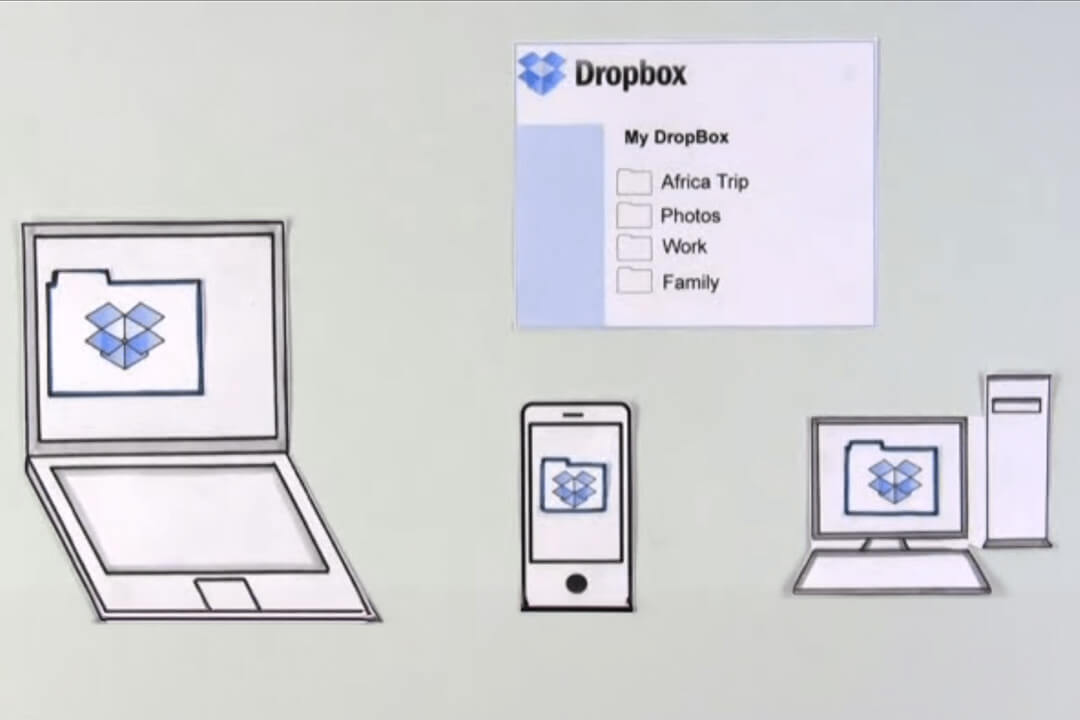
Dropbox: A video as a proof of concept
Before Dropbox wrote the first line of code, the team created a short explanatory video. It showed how the planned software should work: file synchronization across multiple devices.
Result: Huge response and thousands of pre-registrations. The PoC clearly showed that there was a need on the market.
Allbirds: Crowdfunding as a PoC
Allbirds, now known for sustainable shoe fashion, used a crowdfunding approach as proof of concept: The founders presented their idea on Kickstarter to test whether environmentally friendly footwear is actually of interest.
Within a very short period of time, the campaign raised over 120,000 USD with 970 backers. The target was exceeded by more than 6,000%, which showed a clear market need. This result gave the founders the necessary security to ramp up production and successfully further develop the company.
Why this is relevant: Allbirds exemplifies how crowdfunding can work as a PoC. It tests market acceptance, generates capital and creates credibility. Anything before a physical product is ready.
What follows the proof of concept?
If your proof of concept successfully shows that your idea works in principle, then the next step is on: the transition to MVP, the Minimum Viable Product. As an MVP, your idea becomes the first marketable version and is tested there directly on the customer.
- Test basic function: You learn whether the main benefit (the value proposition) is understood and needed.
- Quick feedback: You determine whether your idea is well received by your target group.
- Risk management: You avoid making big investments in a direction that could later prove to be a dead end.
In short, your MVP gets you to the first insights from the real market. The better you have defined and tested your product idea with the help of an MVP, the more streamlined the full-stack development of your software is then.
Do you already have a specific project idea on your desk and don't know whether an MVP is really necessary? We will advise you on your case and can show you based on customer examples in which cases an MVP can be skipped and in which we strongly recommend it.
{{fs-btn-cta}}
Wir schaffen leistungsstarke Plattformen und Websites für Startups, Scale-Ups und KMUs, von Konzept bis Go-Live.
We'll help you with the proof of concept and develop an MVP in just a few weeks that you can go live with!
Proof of Concept template — common questions and answers
A feasibility study comprehensively examines the technical, economic and legal framework of a project; a proof of concept tests a concrete idea on a small scale. The study provides analyses and forecasts. Through an attempt, the PoC shows whether something can actually be implemented.
The documentation should include all assumptions, procedures, test results and conclusions so that decisions remain comprehensible later on. The more clearly the results are presented, the easier it is to convince investors, partners or internal decision makers.
A PoC is particularly useful when a new technology, an innovative process or an unusual business model is to be tried out. It proves the value of the idea before high development costs or long project durations arise.
A PoC is always time-limited and should only run for as long as is necessary for clear proof. Successful PoCs usually last between a few days and a few weeks, rarely longer than three months.
Yes, a failed PoC is not a failure, but provides valuable insights into why an idea is impracticable. It is precisely these insights that help to redefine the direction for future projects.
More articles
White label software refers to fully developed software that you license, brand and sell to end customers under your own brand name, without programming it yourself. For SMEs and agencies, this model can be a fast route to market.
Platform Engineering alleviates the burden on developer teams who, in addition to coding, often have to manage the entire configuration of cloud systems and security pipelines. By building an Internal Developer Platform (IDP), you equip your team with self-service capabilities that make databases or servers available at the push of a button.
.avif)
A prototype is a simplified, partially functional model of a product or software. It is used to test certain characteristics such as usability, function, form, or technology before the final version is developed or produced. A prototype is therefore a validation tool. It forms the basis for verifying assumptions about user behavior, technical feasibility, or market acceptance before a project moves into the often costly implementation phase.