Understanding web platforms: What you need to know before you start
Many projects start with a clear idea: a digital marketplace, a SaaS offering, software for internal processes. But at the latest during implementation, it becomes clear that no construction kit, no WordPress site with a login, is enough here. A web platform is a technical system with its own logic, deep interfaces and genuine security requirements. In this article, you'll learn what a web platform is and what it needs beyond the front and back end to meet your requirements.

What is a web platform?
A web platform is a digital application through which users actively interact with data, processes, and other people. This is often done in real time, mostly role-based and across various devices.
In contrast to a classic website, it not only displays content, but also depicts functional processes: Users register, book, edit, communicate, evaluate.
Specifically: A platform is not a digital shop window, but a system that works independently. Typical examples include SaaS products, marketplaces, internal software for process control or portals with login area, data logic and API connection. The common denominator is business logic that runs in the background.
What makes these platforms complex is not the design but the logic behind them: user rights, dynamic content, interfaces, databases, real-time processes. All of this must not only work, but also be secure, performant and maintainable in the long term.

What a professional web platform must do
If you want to develop a complex web platform, your idea is usually aimed at growth, efficiency, or new revenue models. For this to work, you need a technical basis that works with you. Three things are important here: performance, security, and scalability.
- scalability: Your platform must keep pace with an increasing number of users and a growing range of functions. This is only possible with well-thought-out architecture.
- Safety: User administration, personal data, payment processing — security is not an add-on, but an obligation.
- Performance: Loading times, API response times, database queries: Anything that makes your platform slower costs you users and trust.
In addition, there is: Good platforms offer clear user guidance, a well-thought-out UX concept and are modular so that you can add new features iteratively. And they integrate well into your existing system landscape: via APIs, interfaces, or third-party tools.
Typical use cases for web platforms
Many customers develop ideas for their own marketplace or SaaS platform. It sounds simple at first, but it is usually highly individual. Standard solutions quickly reach their limits here: They are not tailored to your specific model, are difficult to expand or are slow to maintain and operate.
Example web platform: You want to develop a platform on which consultants and customers connect. That sounds like a typical marketplace. But do you want matching, role rights, calendar integration and billing interfaces? This goes far beyond what templates are able to do. That's exactly why it's so important to clarify early on what your platform should really make up.
How does a platform project work?
The path to the finished web platform is not a leap, but rather a guided, structured and iterative process. It usually goes like this:
- Discovery & analysis: In workshops, we clarify your goals, user groups and core functions. What do you really need — and what don't you?
- Concept & prototype: UX, UI, data flows, processes. We translate your idea into a clickable model and technical architecture.
- Development: Frontend, backend, interfaces. Modular, so you can expand at any time.
- Testing & optimization: Stress tests, security checks, real use cases — everything is played out before we go live.
Rollout & development: Launch isn't the end. We will continue to support you, expand, optimize, scale.
Tip: In our blog, you'll find a Guide to creating online platforms and more information about the Development costs.
What role do tech stack, architecture & consulting play in a web platform?
The technology behind your platform is also its foundation. Modern web platforms rely on frameworks such as React, Vue, Laravel, Node.js or Next.js, combined with PostgreSQL, MongoDB, AWS, Docker or Kubernetes.
However, it is not only important what is used, but how. Clean code, clear architecture principles, DevOps processes, automated testing: All of this ensures that you get a stable, expandable system. No patchwork, no short-term solutions.
Equal advice is just as important. A good team thinks along, asks critically, helps you with prioritization and not only understands technology but also your business model. Especially with an individual web solution, you need clear sparring and honest assessments.
Web platform development with Axisbits
As a full-service agency with many years of experience in developing web platforms, Axisbits covers all areas that will lead your project to the goal: from concept to MVP up to launch and beyond:
- Consulting & concept: We help you define your goals and develop a strategy that is market-oriented and profitable in the long term.
- UI/UX design: Our creative team ensures that your web platform is not only functional, but also visually and easy to use.
- Software development: Low-code as a start and hardcode programming for unlimited growth — we'll show you what works best in which phase.
Do you want to start with a web platform or do you need honest feedback on your idea?
Get in touch with us and we'll show you how we can help you. You can find successful projects in our portfolio.
{{fs-btn-cta}}
Wir schaffen leistungsstarke Plattformen und Websites für Startups, Scale-Ups und KMUs, von Konzept bis Go-Live.
We create powerful apps and PWAs for start-ups, scale-ups and SMEs, from concept to go-live.
Web platform — frequently asked questions and answers
A website provides information, a platform depicts processes. With a platform, users interact, manage data, access functions, and use integrated systems. This requires its own logic, interfaces and a clean technical architecture.
That depends heavily on the range of functions. You should expect 3 to 6 months for an MVP (Minimum Viable Product); larger platforms take correspondingly longer. It is important that good platforms are created step by step and grow with the project.
Yes, and that is exactly what often makes sense. A well-thought-out architecture makes it possible to start with a clearly defined core product and later to expand functions modularly. It is important to think about this right from the start.
The user experience plays a very important role. If users can't find their way around, they jump off, no matter how good the technology in the background is. Especially with complex platforms, good UX design ensures that the use remains understandable.
The tech stack depends on what you want your platform to do. It's important that technology, scale, and team experience go together. A good agency not only tells you what is possible — but also what makes sense.
As soon as user or company data is processed, clean security concepts are needed. This includes access controls, encryption, backups, and data protection. Security is not an addition, but part of the architecture.
More articles
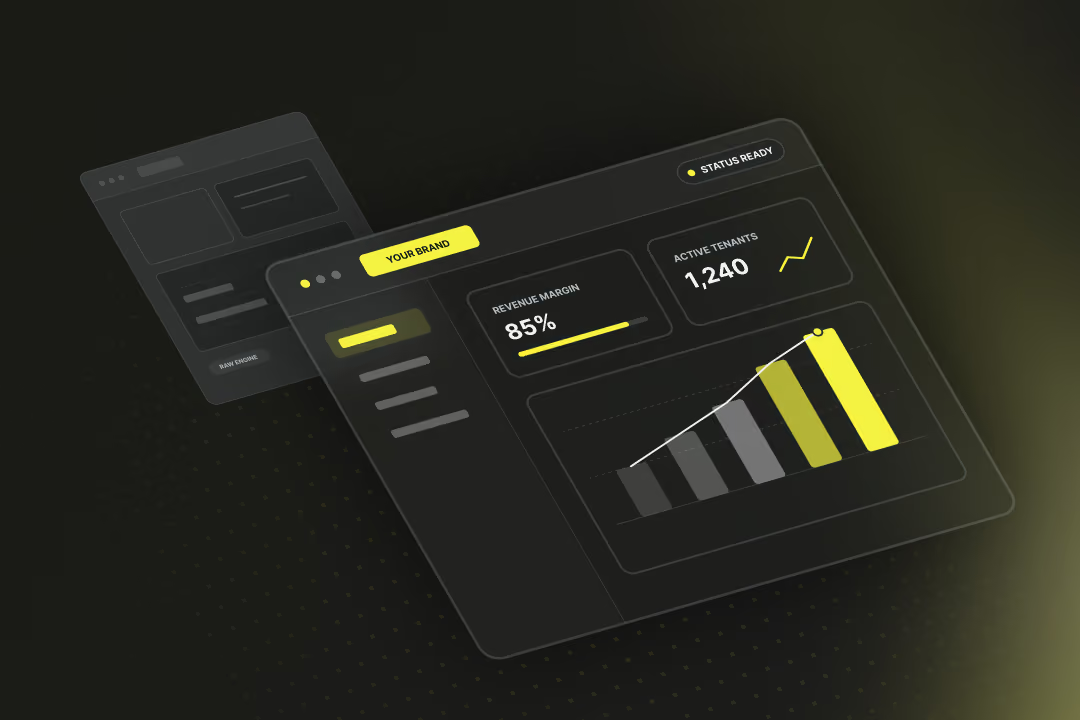
White label software refers to fully developed software that you license, brand and sell to end customers under your own brand name, without programming it yourself. For SMEs and agencies, this model can be a fast route to market.
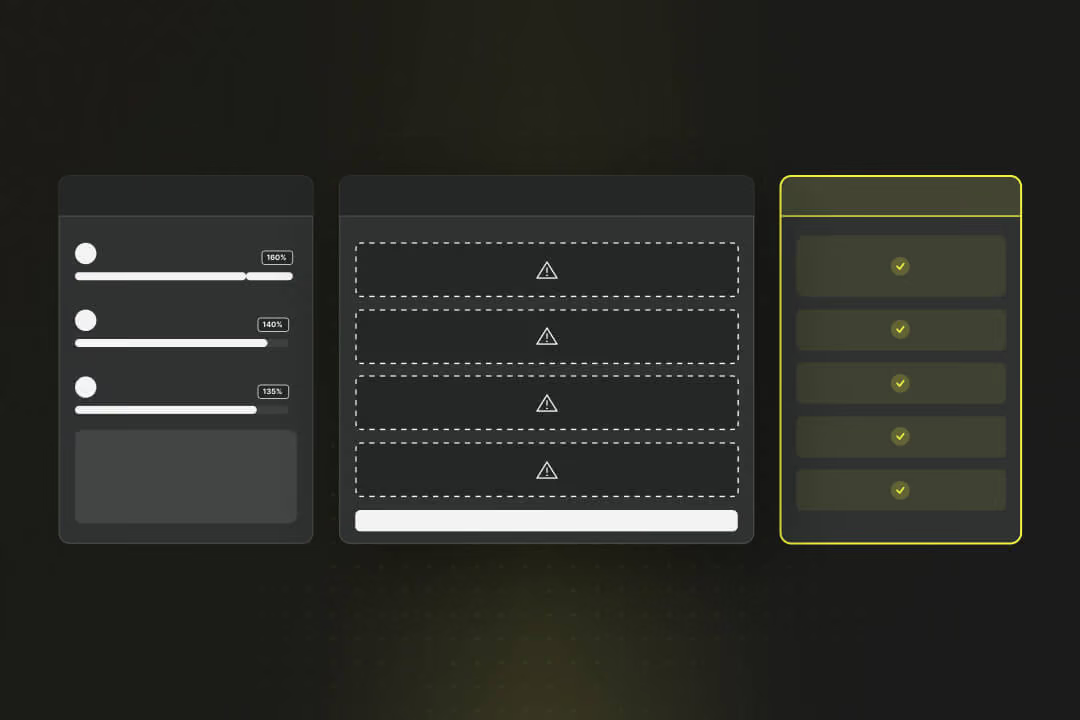
Platform Engineering alleviates the burden on developer teams who, in addition to coding, often have to manage the entire configuration of cloud systems and security pipelines. By building an Internal Developer Platform (IDP), you equip your team with self-service capabilities that make databases or servers available at the push of a button.
.avif)
A prototype is a simplified, partially functional model of a product or software. It is used to test certain characteristics such as usability, function, form, or technology before the final version is developed or produced. A prototype is therefore a validation tool. It forms the basis for verifying assumptions about user behavior, technical feasibility, or market acceptance before a project moves into the often costly implementation phase.