Platform Engineering: How to Reduce Developer Burden and Scale Your Infrastructure
Platform Engineering alleviates the burden on developer teams who, in addition to coding, often have to manage the entire configuration of cloud systems and security pipelines. By building an Internal Developer Platform (IDP), you equip your team with self-service capabilities that make databases or servers available at the push of a button.

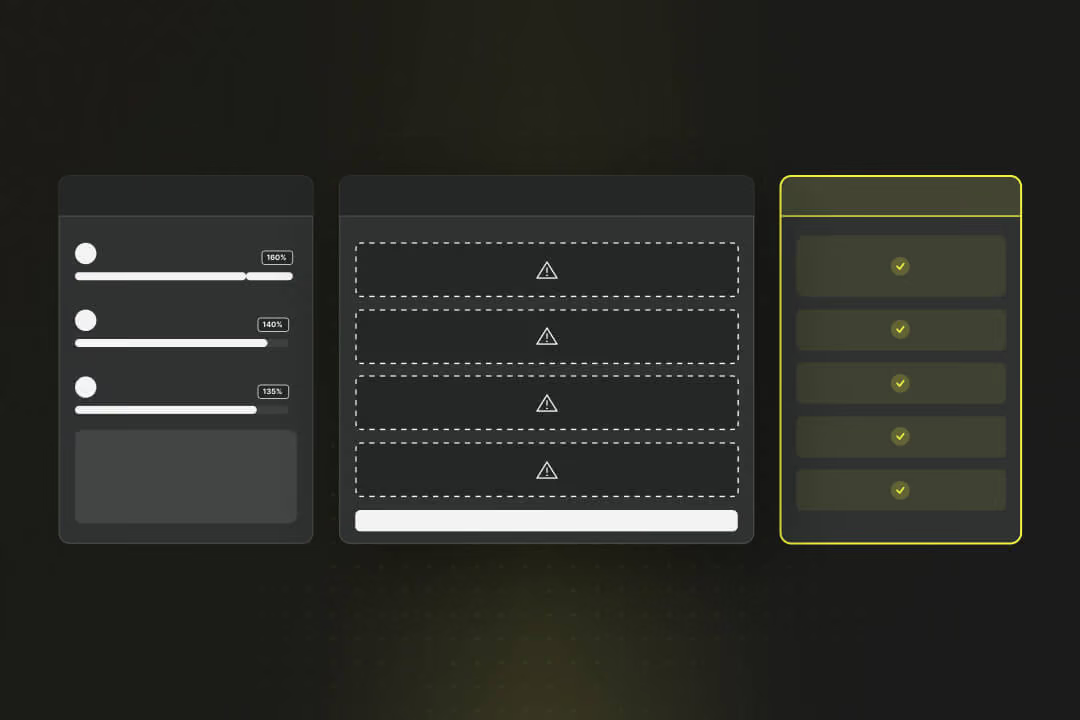
Platform Engineering: Key Takeaways
- Self-Service Infrastructure: Developers independently request required resources like databases or cloud environments via a portal, instead of waiting for approvals from the IT department.
- Cognitive Relief: The platform hides the complexity of underlying systems (e.g., Kubernetes), allowing your team to focus on application logic instead of infrastructure configuration.
- Golden Paths: Predefined templates and automated workflows ensure that every new project is set up securely, scalably, and according to internal standards from the outset.
- Compliance: Security policies and requirements of the Swiss Data Protection Act (nDSG) are directly integrated into the platform tools and automatically enforced with every deployment.
Why is DevOps no longer sufficient for many teams?
The "You build it, you run it" DevOps model reaches its limits as soon as complexity exceeds developers' capacity. In theory, teams should operate their applications independently, but in reality, this often leads to software developers spending a large portion of their time maintaining Kubernetes clusters, security patches, and cloud configurations.
The need for Platform Engineering arises from:
- Cognitive Overload (Cognitive Load): Developers have to master too many different tools and languages (YAML, Terraform, Docker, Cloud APIs), which limits their focus on the actual programming work.
- Shadow IT: Without overarching guidelines, each team sometimes builds its own infrastructure solutions. This complicates later maintenance and makes knowledge transfer between projects almost impossible.
- Inefficient Delays: If developers have to open a ticket with a central IT department for every database or SSL certificate, bottlenecks arise that slow down the entire release process.
- Lack of Compliance Control: In a decentralized environment, it is difficult to fully guarantee and audit compliance with the nDSG across all microservices.
How does an Internal Developer Platform (IDP) help my team?
An Internal Developer Platform (IDP) is a layer between infrastructure tools (like AWS, Azure, or Kubernetes) and the developer. It acts as a kind of operating system for software development. Instead of each developer having to write their own deployment scripts, they use the IDP to request predefined resources. The platform then automatically translates these requests into the correct technical configuration.
- Self-Service Portal: A graphical interface or a command-line tool (CLI) that allows developers to independently create new environments, databases, or cloud resources. The process runs automatically in the background, without any intervention from the operations team.
- Service Catalog: A central directory of all microservices and applications existing within the company. Here, everyone can see who is responsible for which service, which interfaces exist, and what the current status of deployments looks like.
- Workload Abstraction: The IDP hides the technical details of the infrastructure. A developer simply specifies how much memory or computing power their application needs. The platform then takes care of providing these resources in the cloud or in the local data center.
- Integrated Governance & Security: Security checks, backup strategies, and access permissions should be an integral part of the platform. When a developer launches a new service, it automatically receives the correct configuration, for example, to comply with the Swiss Data Protection Act (nDSG).
What is the purpose of the Golden Path in Platform Engineering?
The Golden Path is a predefined and validated way to solve a software task. Instead of reconfiguring the entire infrastructure every time, your team relies on proven templates (scaffolding) that already meet all company standards.
Within this Golden Path, automated CI/CD pipelines, monitoring dashboards, and security scans are already pre-configured and ready to use "out-of-the-box". This ensures enormous consistency across the entire software portfolio:
Every new project starts with the same high quality in architecture and security features. Since the platform takes over the otherwise routine work, the risk of errors is almost completely eliminated.
For Swiss companies, the Golden Path is also the most powerful tool for ensuring compliance with regulations such as the nDSG. Guidelines, for instance on data storage in local data centers or encryption, are embedded directly into the path as "Policy as Code."
With the Golden Path, you ensure that your team can release quickly and the platform guarantees compliance with all legal and technical guardrails in the background.
What role does Platform Engineering play in nDSG compliance?
For Swiss companies, Platform Engineering also serves as a control instrument for data sovereignty. The revised Data Protection Act (nDSG) mandates "Privacy by Design" and "Privacy by Default." In decentralized DevOps, manually verifying these principles in every single microservice is almost impossible.
However, Platform Engineering ensures nDSG compliance at the following levels:
- Enforced Data Locality: The platform can be configured to permit deployments exclusively to Swiss cloud regions or local on-premise servers. System-side blocks prevent misconfigurations that could inadvertently transfer data abroad.
- Identity Management: Access permissions (IAM) are managed through the platform. This ensures consistent adherence to the "Least Privilege" principle, granting access to productive personal data only to authorized individuals.
- Automated Audit Logs: Since every infrastructure request passes through the platform, a complete audit trail is automatically generated. In the event of a data protection audit, you can, at the push of a button, demonstrate who provisioned or modified which resources and when.
- Encryption: Instead of relying on each developer to remember "at rest" and "in transit" encryption, the platform enforces these security features automatically when a new database or storage medium is created.
Your High-End Platform from Switzerland
We help you build your own Developer Platform. As experts in cloud-native architectures, we know what your team will need and how to make their work as easy as possible.
- Consulting: We analyze your existing toolchain and jointly define the golden paths that will most significantly accelerate your time-to-market.
- Building IDPs: We create user-friendly portals that make your infrastructure (AWS, Azure, or local Swiss clouds) accessible via self-service.
- Automation & Governance: We integrate security checks and nDSG compliance directly into your pipelines so that every deployment automatically meets all policies.
- Guidance: We help your team transition from traditional DevOps structures to product-oriented Platform Engineering.
Wir schaffen leistungsstarke Plattformen und Websites für Startups, Scale-Ups und KMUs, von Konzept bis Go-Live.
We develop your platform and modernize your systems for AI. Get a free consultation now!
Platform Engineering – Frequently Asked Questions
DevOps is primarily a culture and a philosophy of collaboration, while Platform Engineering is more about the technological implementation. Where DevOps often leads to developer overload ("You build it, you run it"), Platform Engineering creates the necessary tools and portals to manage this burden.
There's no fixed number, but as a rule of thumb: Platform Engineering quickly pays for itself once you have more than three to five autonomous development teams that need to solve similar infrastructure challenges (cloud, databases, CI/CD). The investment is worthwhile when the time lost to 'infrastructure tinkering' exceeds the cost of building standardized paths.
No, the role of the Operations or Infrastructure team is changing, however: They are moving away from being 'ticket processors' for manual setups and evolving into Platform Engineers who develop the platform as an internal product. The team now focuses on the architecture of 'golden paths' and the security of the overall infrastructure, rather than constantly performing the same routine tasks themselves.
A skillfully implemented IDP (Internal Developer Platform) leverages your proven tools in the background, merely placing a user-friendly layer (abstraction) over them so that developers can use them without needing to master their full complexity.
Even more secure than manual processes. Because every action is executed via the platform and adheres to predefined rules ('Policy as Code'), you eliminate human error. The platform acts as an automatic gatekeeper, ensuring that, for example, data resources can only be created in Swiss data centers.
More articles
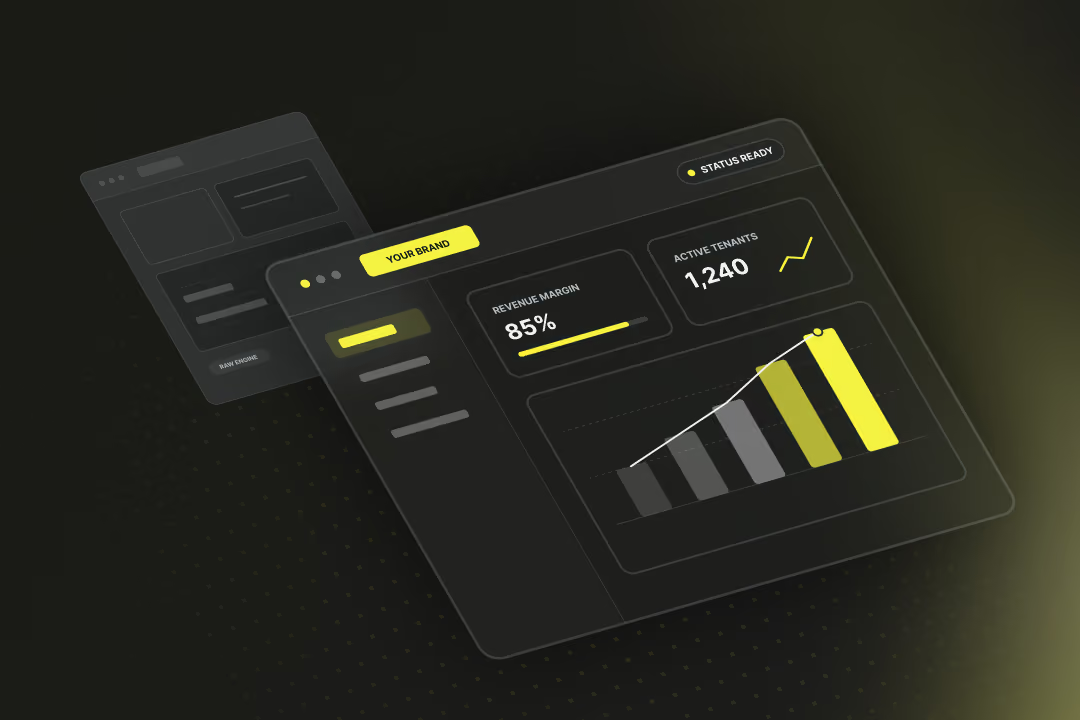
White label software refers to fully developed software that you license, brand and sell to end customers under your own brand name, without programming it yourself. For SMEs and agencies, this model can be a fast route to market.
.avif)
A prototype is a simplified, partially functional model of a product or software. It is used to test certain characteristics such as usability, function, form, or technology before the final version is developed or produced. A prototype is therefore a validation tool. It forms the basis for verifying assumptions about user behavior, technical feasibility, or market acceptance before a project moves into the often costly implementation phase.
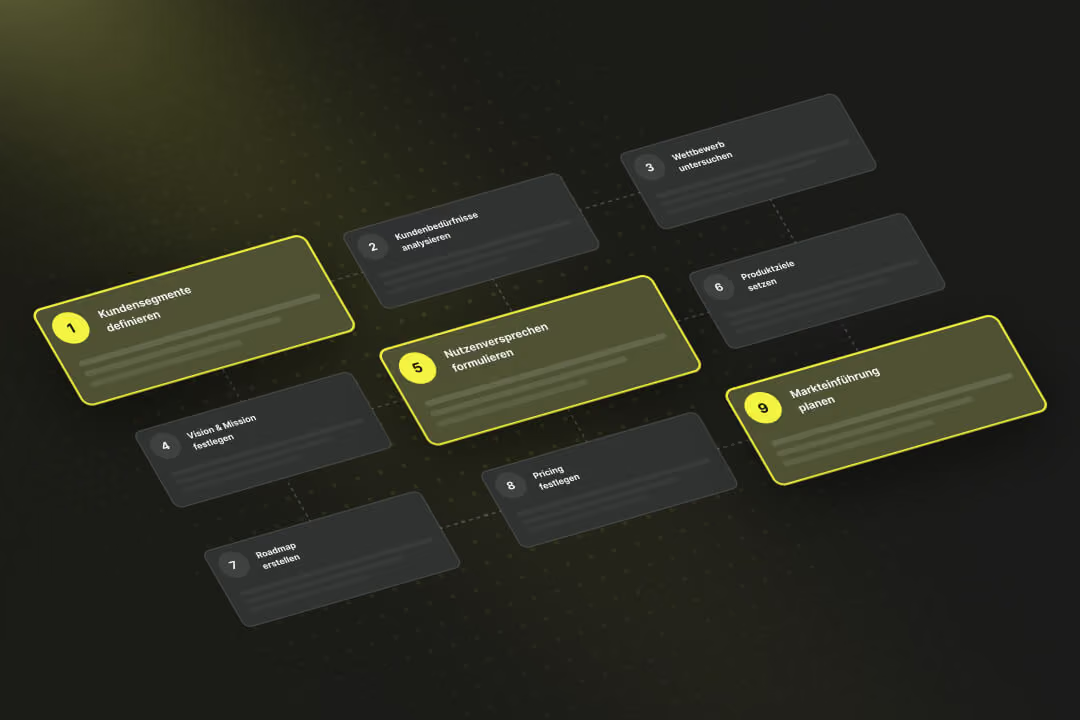
Your product strategy defines the specific value you create for different customer segments and how this value contributes to business success. It forms the foundation for all subsequent product decisions, from development and pricing to market launch.