Is predictive analytics in the commercial real estate sector influencing the construction industry?
Real estate market trends in 2021. Use of predictive analytics tools in commercial real estate for buyers and sellers of commercial and residential real estate.


Predictive analytics in commercial real estate based on artificial intelligence and its impact on the construction industry
Predictive analytics is a part of marketing strategy that aims to provide potential customers with the information that best suits their needs.
Predictive analytics in the real estate sector
Predictive analytics tools combine behavioral factors with customer information. This creates a package of customer preferences that is based on a personalized experience and forms the basis for creating a buying algorithm.
Benefits of predictive analytics for real estate developers and buyers:
- Structured user data: The work is made easier for developers, homeowners and investors. Predictive analytics takes motivation and preferences into account and enables an individual approach for every market participant. In this way, every user sees real estate options that not only meet the search criteria but also meet individual preferences.
- Segmented data: These are the most reliable source of information, particularly for investors who are looking for the perfect property. They provide detailed analyses, including property values, potential rental income, and estimated occupancy rates.
- Improving return on investment: Predictive analytics tools can predict how many local investors would be willing to pay for renovations.
Previously, all these parameters were calculated manually. Today, intelligent predictive analytics systems make it possible to predict market trends, optimize activities, and increase profitability.
Future trends in the real estate sector
Artificial intelligence has revolutionized all areas of business. While the real estate market was stable until 2003, learning technologies made for a real revolution. With the progress of predictive analytics, the market is noticeably recovering.
Benefits of modern real estate development technologies:
- Successful investments: AI-based predictive analytics enables well-founded investments through the precise assessment of the situation and development potential.
- Analysis of renovations: Predictive analytics helps investors assess the potential added value of improvements and buyers' willingness to pay.
- Real estate market change: Predictive analytics tools create new opportunities for buying and selling commercial and residential real estate.
Big data solutions in predictive analytics
Choosing the right property requires processing huge amounts of data. Predictive analytics systems take into account numerous factors, such as:
- Demographics of the region
- Average price per square meter for residential and commercial properties
- Ratio of retail space to number of inhabitants
- Safety level
- competitive environment
- availability of parking spaces
- traffic infrastructure
- Purchasing power of the local population
- Profitability of retail space rental
Trends in the real estate market in 2020
Few options for buyers:
During the pandemic, real estate supply fell by almost 22%. Buyers should:
- Make compromises and renovate homes in good locations.
- Include multiple districts in the search
- Get a mortgage approval before looking for a property.
Rising real estate prices:
Buyers should make sure that:
- The monthly burden does not exceed 25% of their income.
- The deposit is at least 20% to avoid additional costs.
- A 15-year fixed-rate mortgage is optimal.
Low mortgage interest rates:
In 2020, interest rates on a 15-year mortgage were at their lowest level in 20 years at 2.1%. This attracts both buyers and sellers, but potentially creates financial challenges for buyers.
Growing online real estate services:
Digitalization simplifies the sales and purchase process through digital signatures, remote notarization, and more. Although hybrid services reduce costs, they also pose risks.
conclusion
Our team uses modern technologies to help you buy and sell residential and commercial properties. Our highly qualified specialists guarantee you the best possible financial result.
Wir schaffen leistungsstarke Plattformen und Websites für Startups, Scale-Ups und KMUs, von Konzept bis Go-Live.
More articles
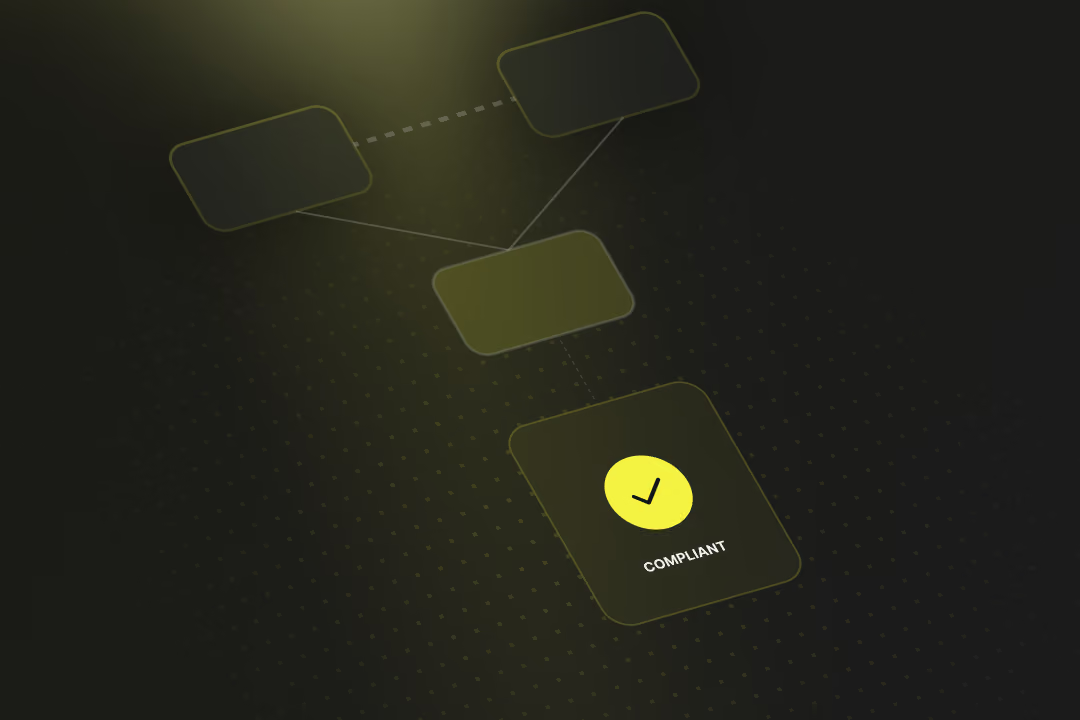
Business Process Management (BPM) is the structured control of business processes through modeling, automation, measurement and optimization. The EU rules DORA and NIS2 reach Swiss companies too, by way of their supply chains.

Software deployment is the process that moves finished code out of the development environment and into live production. GitOps, Progressive Delivery and DevSecOps make releases faster and safer. At the same time, the revDSG and even EU regulations reach into Swiss pipelines.
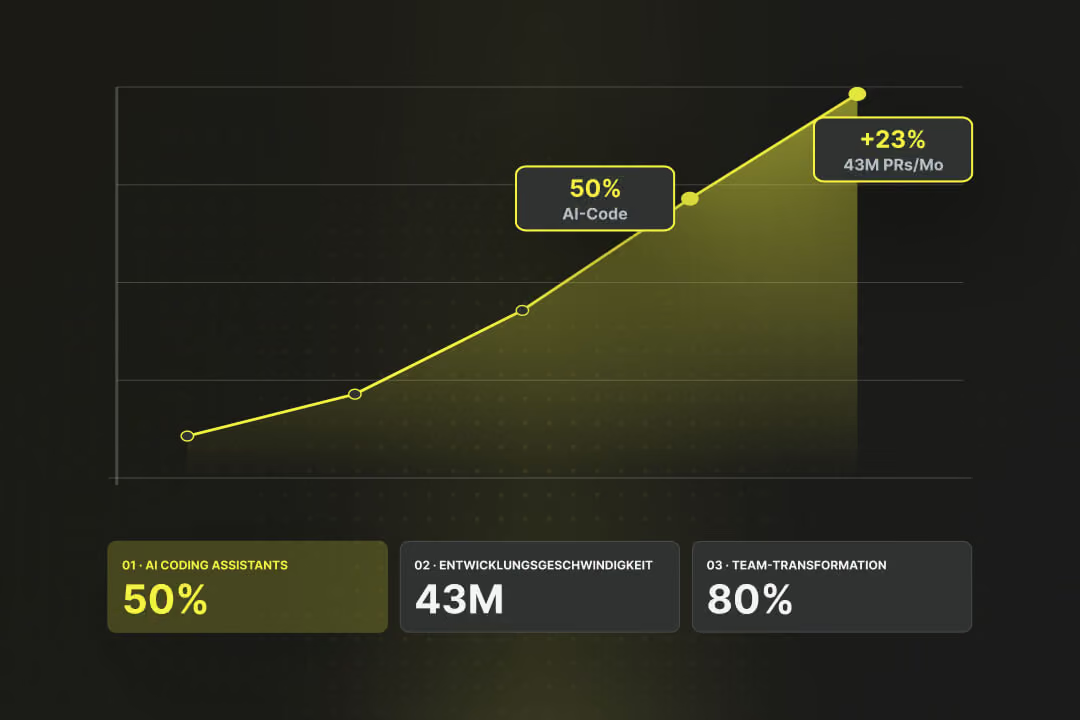
By the end of 2025, almost half of all code on GitHub was generated using AI tools, according to EY Switzerland. Each month, 43 million pull requests were merged, a 23% year-over-year increase (Source: EY Switzerland). Gartner predicts that by 2030, AI-native development platforms will lead to 80% of organizations transforming large developer teams into smaller, AI-augmented units (Source: Gartner). Software development is changing faster than ever before. We highlight the trends that truly matter in 2026, what's driving them, and what this specifically means for businesses.