Cross selling - How to use the sales strategy correctly and increase your turnover
Cross-selling is one of the most effective methods in sales: Customers receive useful additional offers that complement their original purchase. Vendors are thus increasing the average order value. However, it is important that these recommendations are not intrusive, but match the product and the customer. In this article, you'll learn exactly what cross-selling means, how to use it in a customer-friendly way, and which examples show how to do it correctly.

What does cross-selling mean?
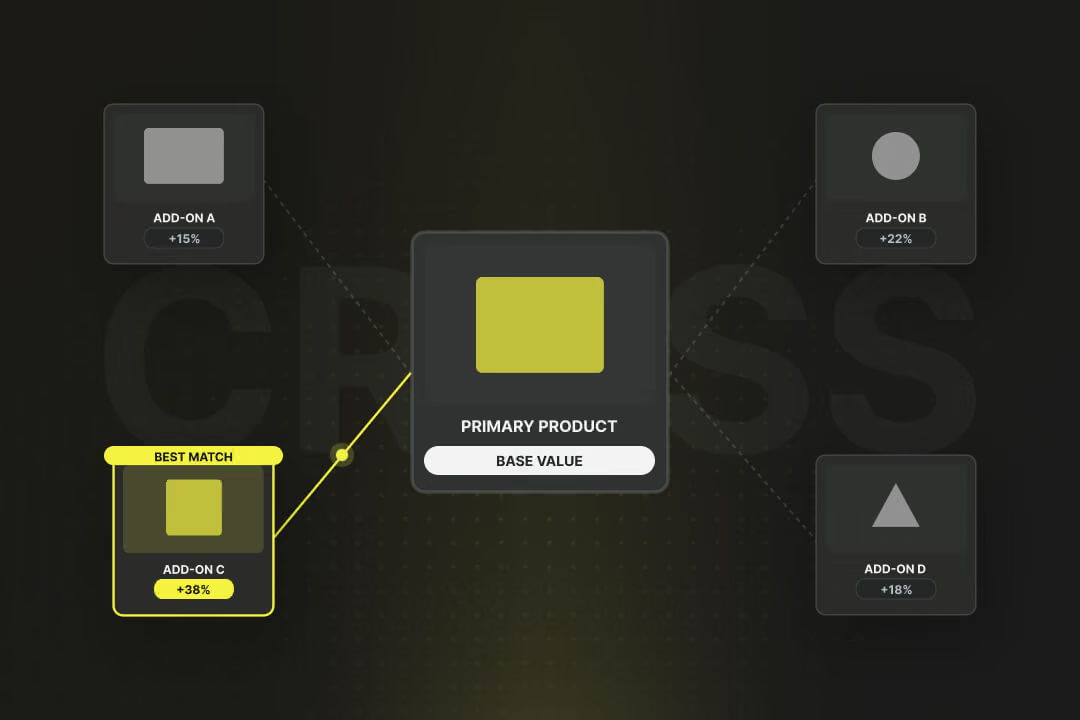
Cross-selling, or in German Querverkauf, is a sales strategy in which a customer is offered additional or thematically appropriate additional products to a main product that has already been purchased or selected. The aim is to increase the overall value of the purchase and to offer customers added value by offering them complementary products that meaningfully support their original purchase decision.
Examples of cross-selling
- Cross-selling example in retail: For a laptop, the matching bag and an extended warranty with coverage against water damage are offered.
- Cross-selling example of services: After a haircut at the hairdresser, suitable care shampoo and styling products are offered.
- Cross-selling example in a car repair shop: For the wheel change, wheel balancing and storage of wheels not currently in use are also offered.
Cross-selling examples from online retail
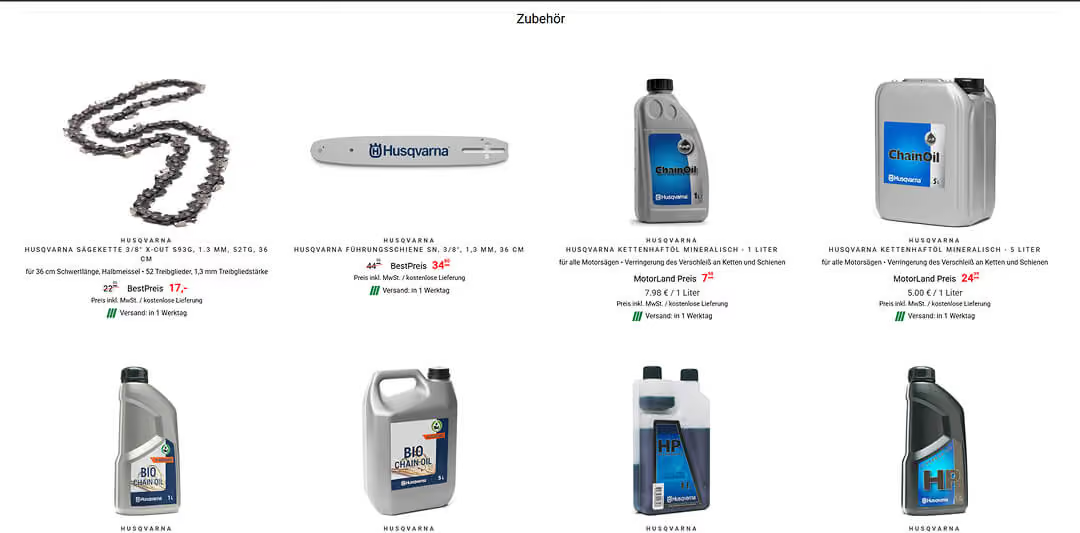
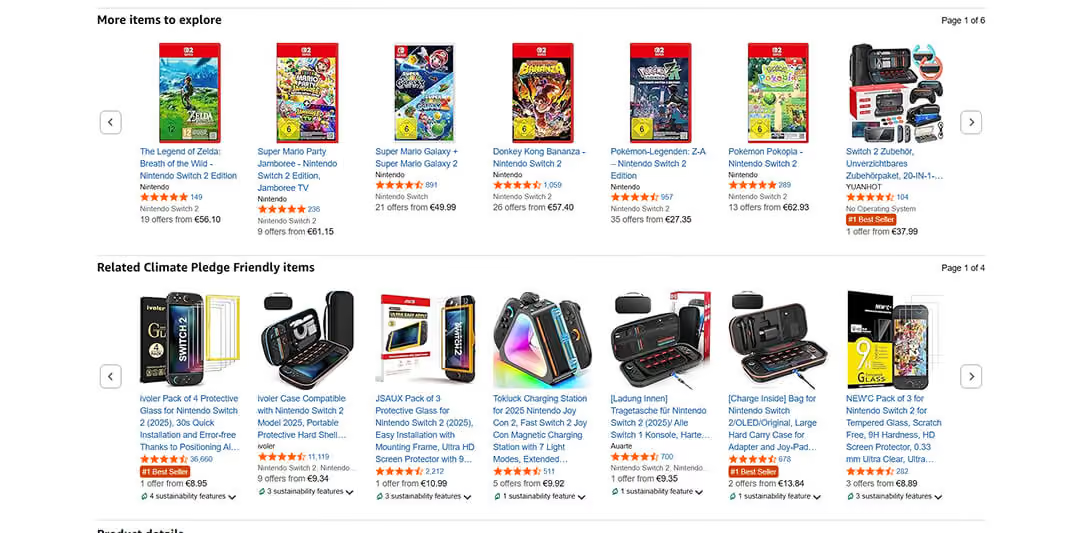
Cross-selling is an established standard in e-commerce. Online shops usually offer additional items that match the products shown. The categories of cross-sell products include “Customers also bought,” “Suitable accessories,” or “Popular items.”



What characterizes good cross-selling?
Good cross-selling offers customers a useful additional product that improves the use, safety, or lifespan of the main product. It’s based on real need, relevant, helpful, and doesn’t come with sales pressure.
Example: You get advice on kitchen scales and finally decide on a model. Before payment, you will be offered the appropriate batteries so that you can use the new scale at home right away.
Good cross-selling is characterized by:
- Relevance: The additional offer must match the original product.
- Added value: Additional sales that help customers make even better use of their purchased product or enjoy it for longer.
- Unobtrusive: Cross-selling is well done when it looks more like a friendly tip.
- Timing: Good cross-selling doesn’t feel hasty, but comes to the right place at the right time.
- Product and customer understanding: The more thoroughly the product and its use by the provider are understood, the easier it is to create suitable additional offers.
What are the benefits of cross-selling?
Cross-selling offers the following benefits for both the provider and the customer:
- More revenue per customer: Cross-selling is always also a lucrative additional sale for the provider.
- Better customer experience: The customer receives a complete package that can be used immediately.
- Higher customer satisfaction: Customers don’t have to buy anything and are less likely to exchange products.
- Stronger customer loyalty: Cross-selling can help turn a one-time buyer into a regular customer, especially if the recommendations are helpful and honest.
- Insights into customer behaviour: When you actively cross-sell (e.g. through recommendation systems or advice), you learn a lot about the buying behaviour of customers. This data in turn helps to make your offers even better.
- Differentiation from competition: When you think along with the sale and complement the purchase, you set yourself apart from other sales channels. Customers remember positive, personal experiences.
How do cross-selling and upselling differ?
Cross-selling means offering a customer additional products to the main product, for example a laptop bag. Upselling, on the other hand, aims to provide the customer with a higher-quality variant of the original product, such as a laptop with more memory or a better processor.
Cross-selling in e-commerce
With correctly placed cross-selling offers, you can increase sales value. However, it is also possible to view cross-selling as part of conversion rate optimisation: if customers can put together a ready-to-use package on your site thanks to the cross-selling offer, they are more likely to complete the purchase.
This involves two mechanisms:
- Customers already identify with their product selection because they contributed to it themselves.
- With the bundled package, your customers don’t have to go anywhere else to get what they need to use the product. The purchase is therefore close at hand.
At Axisbits, we know from the experience of numerous website and shop projects that conversion rate optimisation can be very detailed and time-consuming, but equally lucrative.
When your shop’s performance consistently falls below your expectations and you are sure that more should be possible, a neutral outside perspective may help. Get in touch with us and we’ll show you how we approach optimising your site’s conversion rate.
{{fs-btn-cta}}
Wir schaffen leistungsstarke Plattformen und Websites für Startups, Scale-Ups und KMUs, von Konzept bis Go-Live.
We analyse your user journey and show you how to generate targeted additional sales – with well-thought-out cross-selling, honest advice and measurable impact.
Cross selling — frequently asked questions and answers
Bundle offers are pre-packaged product packages for a total price.
However, cross-selling is more individual for the customer, because here, an additional suitable product is specifically recommended to the customer during or after the purchase.
In e-commerce, cross-selling is implemented through automated recommendations, such as “Customers also bought...” or “That goes well with it.” The following applies here: The better the database, the more relevant and successful the offers.
Especially accessories, consumables or additional services (such as cleaning, insurance, installation). Products that round off or simplify the main purchase are ideal.
Good and honest cross-selling is customer-oriented and helpful and therefore by no means manipulative. It can even save the customer further trips or hassle. Bad cross-selling, on the other hand, looks intrusive or unnecessary and quickly feels like sales pressure.
More articles

Many teams experience Sprint Planning in one of two extreme ways: either as an endless meeting that drags on for three hours and still provides no clarity, or merely as a ticket-shuffling exercise in Jira that could just as easily have been handled via email. Neither of these approaches aligns with the true purpose of Sprint Planning.

According to the swissICT Digital Excellence Report, only 35 percent of Swiss companies are on track with their digital alignment. For 26 percent, there is significant need for action (Source: swissICT). Companies invest in tools, cloud services, and AI pilot projects without a plan that holds it all together. The result: fragmented system landscapes, duplicated work, and budgets that don't flow where they have the most impact. The right IT strategy is the answer to this.

Artificial intelligence is now an established tool in software development, integrated directly into the programming environment. Developers spend less time writing boilerplate code and can instead focus on how the different parts of an application logically interact.