Landing page explained simply: Understanding the difference to the website
If you're talking about landing pages everywhere and you don't know whether you need to rebuild your website now, it's time for a classification: In this article, you'll learn what a landing page is, what it's used for and how it differs from websites. And no: You don't have to change trains. You can also find out here why this could even hurt.

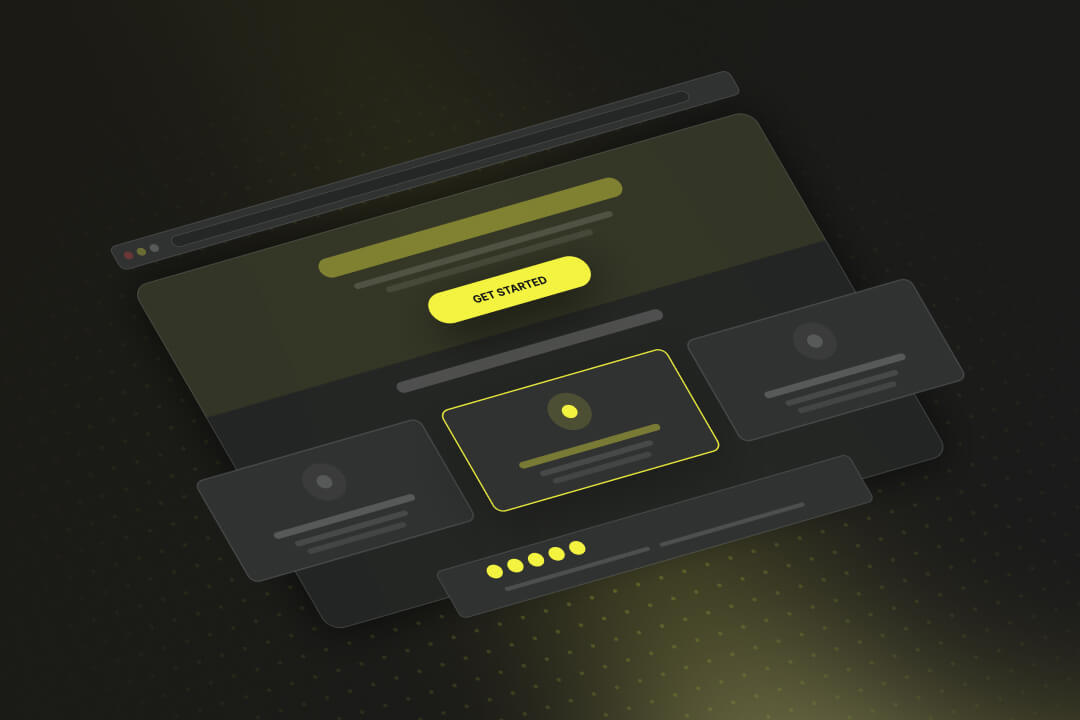
What is a landing page?
A landing page is a specially designed website that is geared towards a single goal: for example, registration, contact, or purchase.
The visitor should not really browse freely or look around there, but will be guided to a very specific action based on the content shown. This is the first difference to classic websites, on which information is often distributed and linked in a variety of ways.
What is a landing page simply explained?
Imagine you're running an ad for a specific offer. When someone clicks on it, they shouldn't end up on your homepage and find all sorts of information, but only the information related to the specific offer
The user lands (=landing) on a specific page (=page). There he only receives this offer, without distractions, without detours, sometimes even without a menu.
Brief explanation of terms and distinction:
- Website: The entire online presence of a company with homepage, services, contact, etc.
- Web page: A page or subpage within a website
- Landing page: A standalone page that doesn't have to be linked to a larger website (but it can be).
The concept of a landing page is simple, but often very effective: Fewer choices mean more focus on the topic. And that is exactly what increases the likelihood that a visitor will not only look but also actually act.
That is why landing pages are primarily used where measurable results are important: in sales campaigns, offering services or looking for employees.
How is a landing page different from a website?
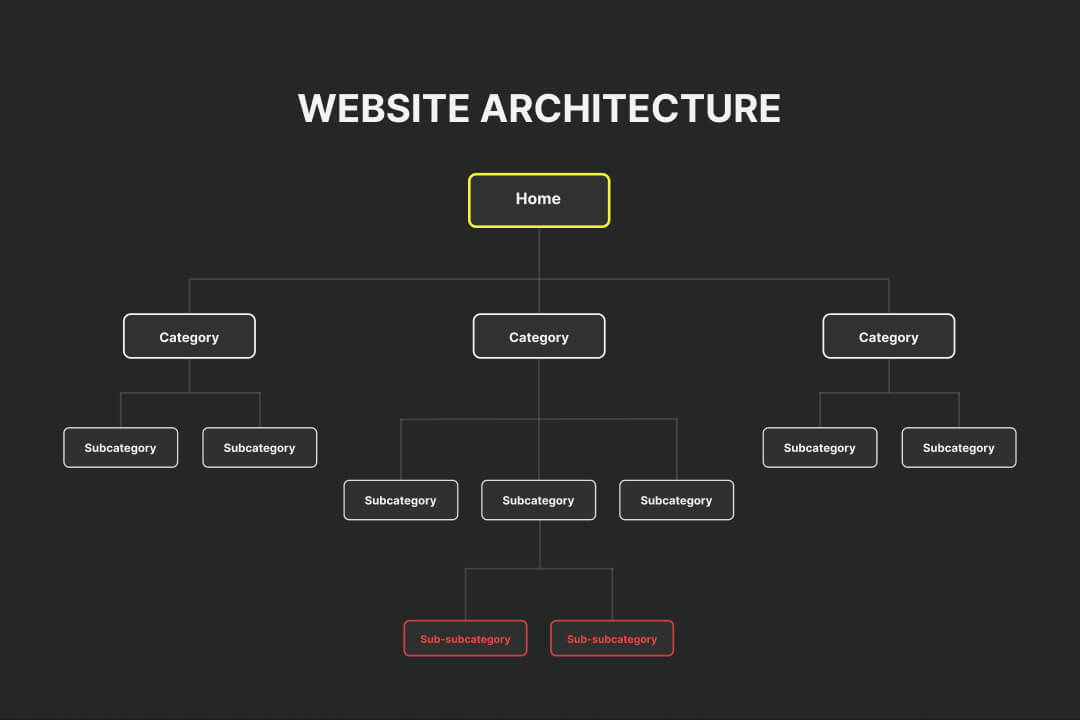
The difference between a landing page and a normal website lies in scope and objectives. A website provides broad information, links to various contents and allows visitors to move freely. The links and the menu are presented very clearly. The operator even wants the user to look around for a long time and intensively.
The website presents the entire offer and invites you to explore. It can have numerous sub-pages and lots of content. It corresponds to the entire retail store.
A landing page corresponds to a deliberately designed shop window. Good landing pages are structured in such a way that they contain a closed line of argument, which leads to the desired action.
This chain of arguments often begins with addressing a specific problem (=pain) or strong wish (=need), so that the user immediately recognizes himself and is interested.
The following links in the chain should then show that the provider is deeply familiar with the problem/request, can solve it and has an offer tailored exactly to it. In addition, there are, among other things, the voices of already satisfied customers to prove the effectiveness (=social proof).
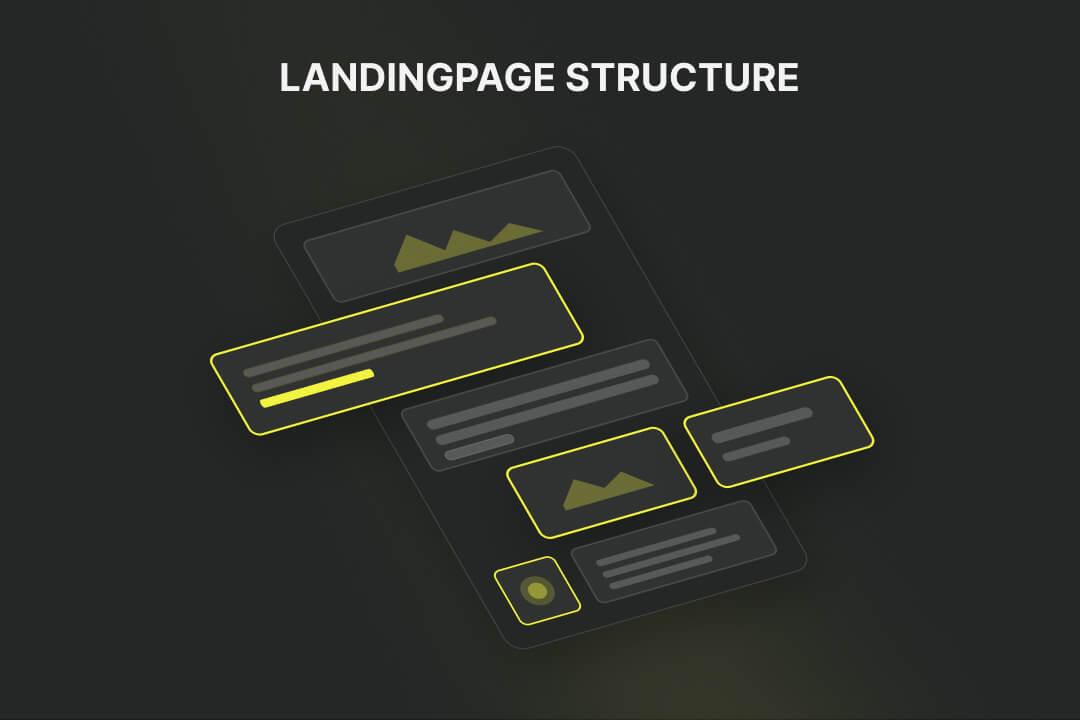
On the landing page, anything that could distract the user from the line of argument presented is omitted. Strolling around, as if on a website, is not allowed here.
As a result, there are virtually no links, no obvious menu structure or references to other content. It is intended that the visitor finally performs the desired action.
There is no technical difference between websites and landing pages. Both must be located on a server, need an address (URL), security features (SSL), etc. Only the scope and variety of content on websites are higher and therefore more complex to manage.
Typical elements of a landing page
Even though every landing page is of course individually structured, there are elements that almost always occur. These have proven effective and serve one purpose: generate attention, build trust and persuade the user to take the desired action.
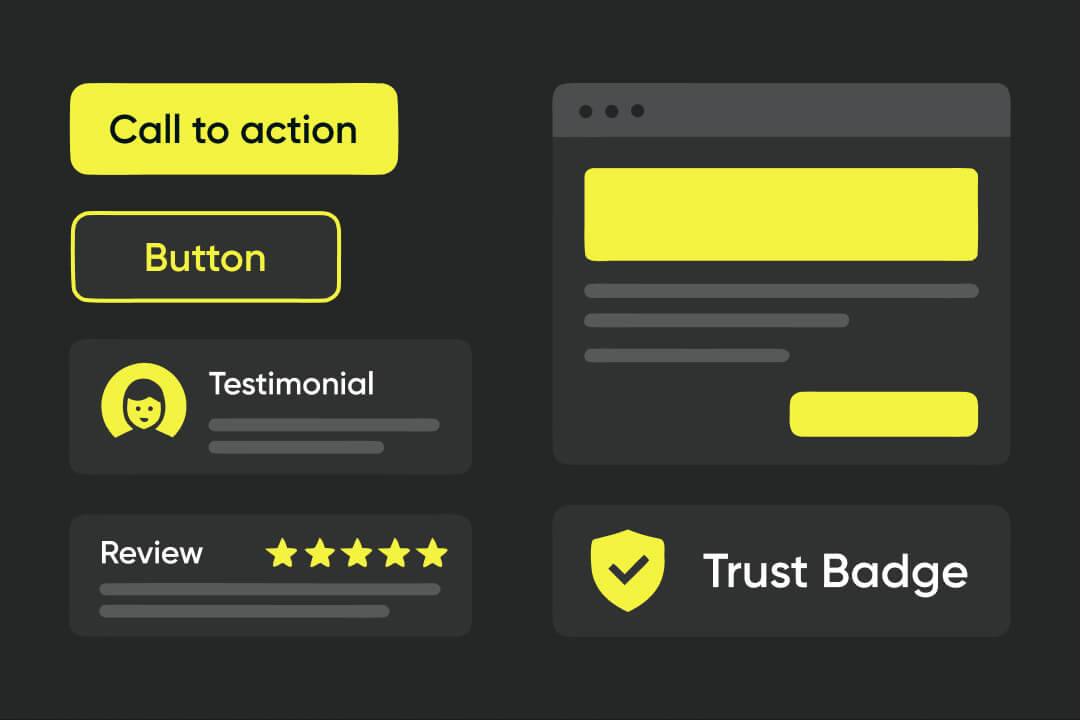
- Headline with a clear value proposition: The first sentence on the page must immediately make it clear what it is about and why it is relevant to the visitor.
- Trust elements: Because landing pages are often detached from the actual website, they must be able to build trust on their own. This is achieved with customer testimonials (social proof), quality seals, specific figures or answers to frequently asked questions.
- Content without distractions: Instead of a lot of information, the essentials are summed up. Texts are short and very clearly structured, usually in short paragraphs or bullet points. Even when you skim through the page, the most important arguments should stand out.
- Call to action (CTA): The CTA is the multi-placed core of the page. CTAs can be displayed as buttons, banners, forms, etc. It appears several times in the text, always visibly and clearly formulated: “Request now”, “Get access”, “Save space.”
How do users get to a landing page?
A landing page is rarely or not at all in the main menu of a larger website. Landing pages are more likely not to be visited casually, but targeted. This is usually achieved through a specific impulse from outside. In short: The user is directed there.
Ways to get users to a landing page:
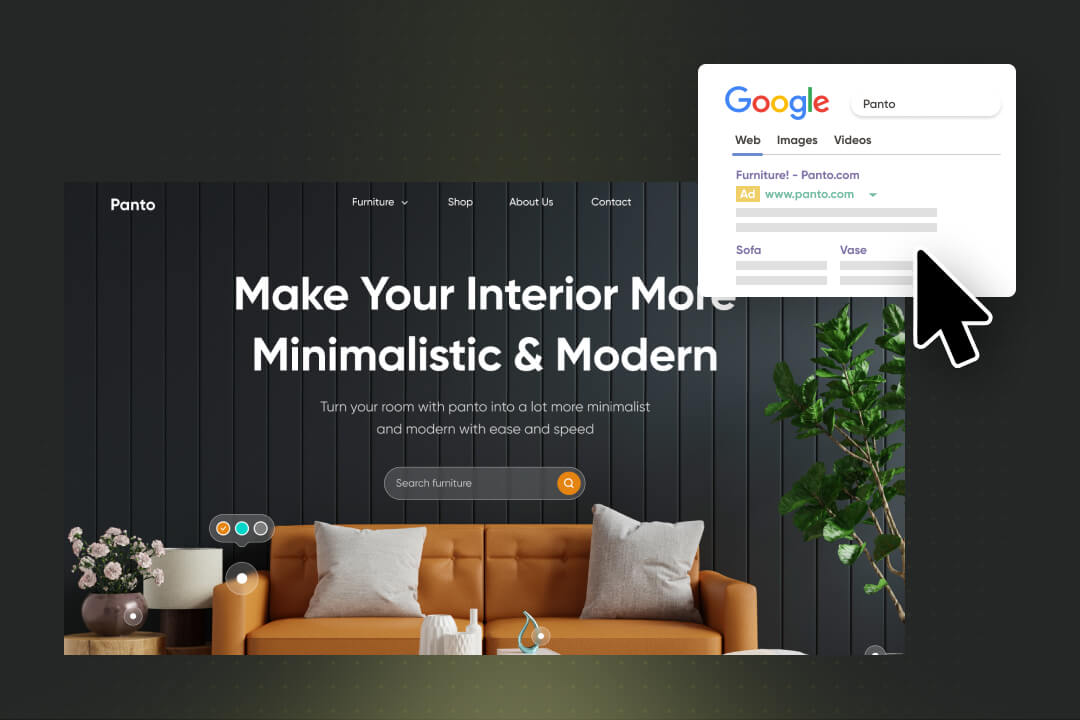
- Advertisements: Common entry point, e.g. via Google Ads, advertising on social media, YouTube or a banner on another website. Email campaigns and newsletters: In email marketing, too, targeted call-to-actions lead to landing pages.
- QR codes in print, flyers, posters, etc.: QR codes are used in offline marketing. Interested parties scan them with their smartphones and land on the associated landing page.
- Links from content, PR, or partner networks: Some landing pages are specifically linked to blog articles, press releases or partner sites.
Regardless of which channel: The landing page only works if the transition from source to landing page is logical. What the user expects and what he sees must match. Only then will he stay and there is even a chance that he will carry out the desired action.
What do you need a landing page for?
As described above, each landing page has an effect on a specific goal. Basically, they are a powerful means of advertising or sales.
- Acquiring leads: A lead is a potential prospect who leaves their contact details, for example for a consultation, a download or a call back. Landing pages are often used precisely for this: They offer users a clear incentive to fill out a form. In return for his contact details, he receives a free information package, an appointment or an individual assessment.
- Product or offer page: If you want to promote a specific offer, you need a page that focuses exclusively on that. The landing page clearly explains the benefits, answers typical questions and only offers one option, such as “Order now” or “Try for free.” Everything else is omitted.
- Landing page of an advertising campaign: When combined with ads, mailings or social media posts, landing pages are the logical goal. They pick up on the topic of the campaign and guide the user forward.
- Event or webinar registrations: Landing pages are proven ways to promote events. They answer the most important questions concisely and offer a simple and binding registration process.
- Regional or seasonal promotions: Local service providers, seasonal offers or promotions with a limited time frame can be easily displayed on landing pages without rebuilding the main page every time.
Sometimes very small websites of freelancers or small businesses are also referred to as landing pages or one-pagers. The concise offer is presented there, along with contact options and mandatory legal information. Strictly speaking, this is not a landing page, but for the sake of simplicity, they can be included.
Decision-making aid: When is a landing page worthwhile?
Landing pages are not intended as a substitute for a “real” website. Building a landing page is only worthwhile if there is a clear offer and an associated goal. This is typically the case with campaigns, limited-time offers or targeted lead generation.
A landing page is worthwhile if...
- you want to achieve a specific action: e.g. registration, purchase, appointment booking
- you want to attract targeted users to an offer from one source
- your target group is clearly defined and the offer fits
- you want to measure the success of the site directly, for example via conversion rates
It’s not worth it if...
- the offer is not yet clearly defined
- the user should choose between several options or see your entire portfolio of offers
- it is primarily about orientation or information
- you don’t have a clear traffic source yet (e.g. ads, emails, campaigns)
If you have a targeted message for a clearly defined target group, it’s the right tool. If you want to explain to a visitor who you are and what you offer, your website is a better place.
Tip: If you’re still looking for inspiration for designing your website, feel free to look around our Axisbits portfolio.
Takeaway: Landing page as a tool
You should not understand the concept of a landing page as a trend or a new type of website. If you are already well set up with your website, there is no reason to invest money and time in converting it into a landing page.
Used incorrectly, the landing page is more likely to restrict the information options that are otherwise much larger on a website. Conversely, you dilute the initial impact of a landing page when you compulsively inflate it towards a website.
However, if you want to present a new offer in a targeted and undisturbed way, a landing page is a suitable tool for this purpose.
Tip: In another article, we’ll show you how to create a landing page yourself.
Wir schaffen leistungsstarke Plattformen und Websites für Startups, Scale-Ups und KMUs, von Konzept bis Go-Live.
We take over your project and ensure more leads and conversions with a high-end landing page!
Landing page — common questions and answers
Your website is ideal for presenting your company, your range of services and general information. But if you only want to display a specific offer, you need a page (=landing page) that is geared exactly to that and motivates visitors to take action there.
This can be useful, for example if your locations differ or if you want to advertise and measure an offer in a targeted manner. The landing page separates the essentials from the rest and leads the user directly to the decision.
Yes, for example for applications, seasonal offers or downloads. It is only important that you have a clear target group and that access to the site is managed sensibly.
Although it is particularly effective in campaigns, it also works in newsletters, at trade fairs, in lectures or when addressed in a targeted personal manner: wherever an action is to be triggered.
As long as necessary, but as focused as possible. There is no maximum or minimum length. It is only important that all relevant information is available and that nothing distracts from the goal. A clear start, a visible CTA and the necessary building of trust are often enough.
More articles

Many teams experience Sprint Planning in one of two extreme ways: either as an endless meeting that drags on for three hours and still provides no clarity, or merely as a ticket-shuffling exercise in Jira that could just as easily have been handled via email. Neither of these approaches aligns with the true purpose of Sprint Planning.

According to the swissICT Digital Excellence Report, only 35 percent of Swiss companies are on track with their digital alignment. For 26 percent, there is significant need for action (Source: swissICT). Companies invest in tools, cloud services, and AI pilot projects without a plan that holds it all together. The result: fragmented system landscapes, duplicated work, and budgets that don't flow where they have the most impact. The right IT strategy is the answer to this.

Artificial intelligence is now an established tool in software development, integrated directly into the programming environment. Developers spend less time writing boilerplate code and can instead focus on how the different parts of an application logically interact.