Understanding upselling: That's how the big shops do it
For customers, using upselling correctly can be a helpful guide, as they discover products that better meet their requirements. For providers, upselling is a proven method for specifically increasing average sales value. Find out what upselling means, how to use it sensibly and in a customer-friendly way, and find examples from e-commerce, stationary retail and services.

What does upselling mean?
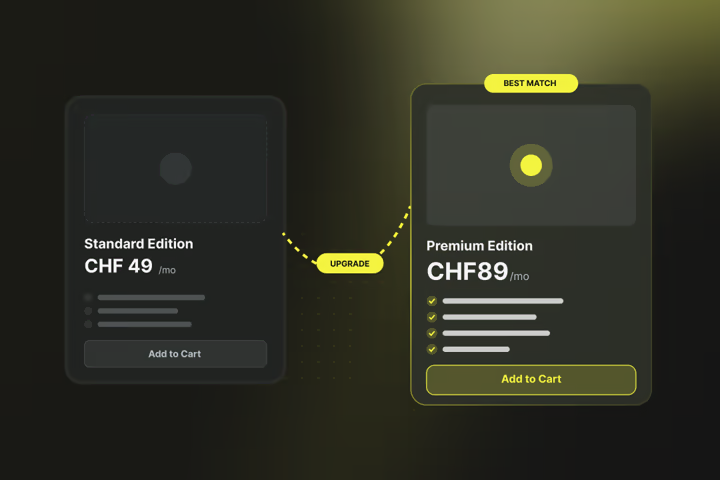
Upselling means offering a customer a higher-quality version of a product or service. The aim is to better meet original requirements, with more performance, better functions or more convenience.
Examples of upselling
- Upselling example for retail: A customer chooses an entry-level smartphone. Instead, the seller recommends a model with a better camera and larger battery.
- Upselling example for services: When visiting the hairdresser, premium treatment with head massage and special care is offered instead of the standard package.
- Upselling example from a car repair shop: During the inspection, it turns out that new tyres are needed. Instead of the standard tyres otherwise chosen, a premium model with better grip and longer life is recommended.
- Upselling example from e-commerce: A customer is looking at a laptop with 256 GB of storage, and the shop also shows the variant with 512 GB and a faster processor.
Upselling examples from online retail
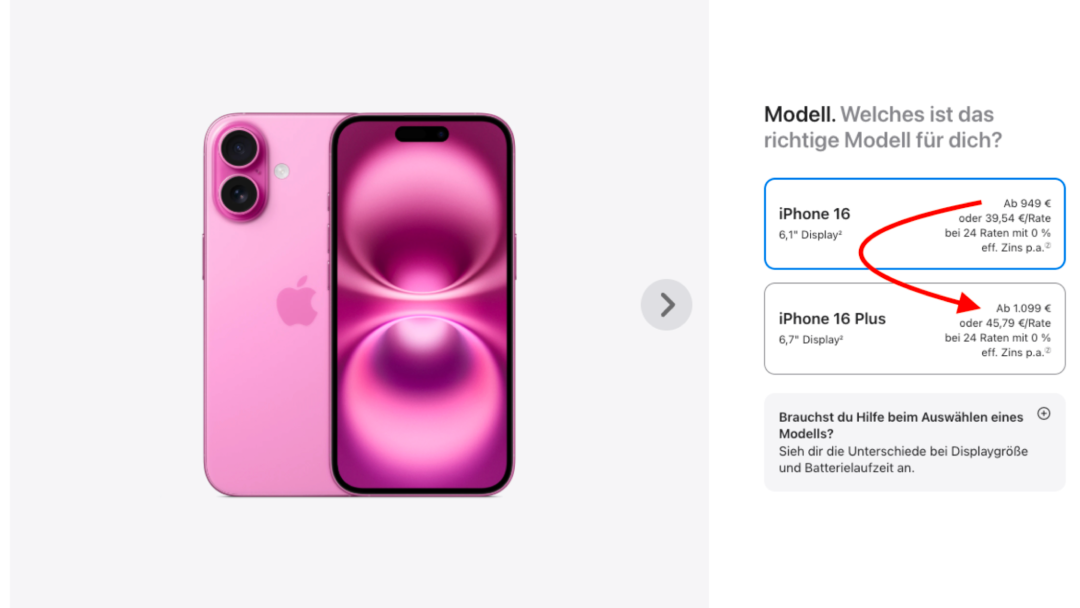
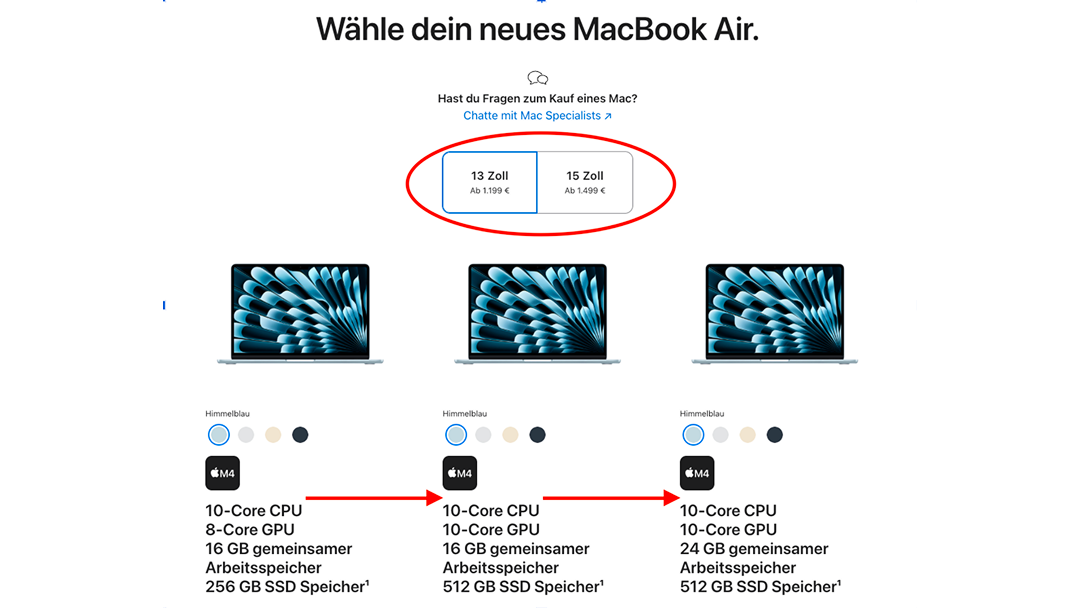
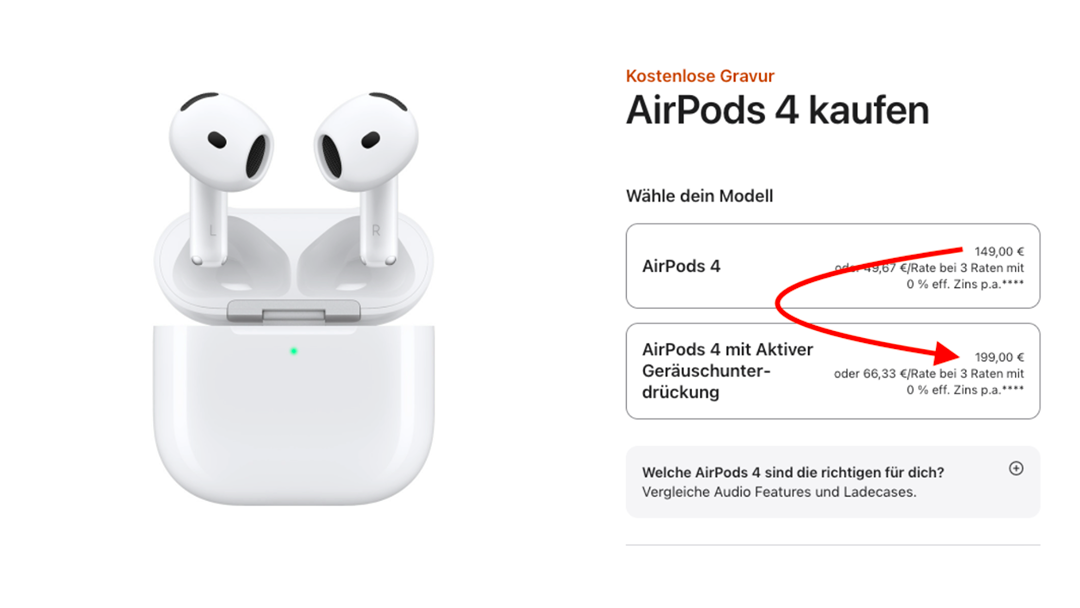
Apple offers an upsell version of virtually every product. The Plus version can also be selected on the iPhone product page; the MacBook Air can be configured in terms of its size (13 or 15 inches) and technical specifications. Even accessories such as AirPods headphones are available as an upsell with active noise cancellation.
What makes for good upselling?
Good upselling is based on the customer’s needs and does not simply try to push more expensive products. It shows the customer a better solution to their original problem.
True upselling primarily occurs during a personal consultation. Online shops are therefore more likely to speak of passive upselling.
Example: You are getting advice on a loudspeaker system and already have a model in mind. During the conversation, it turns out that this model does not support audio streaming via Bluetooth, which would also be useful. The seller therefore recommends a slightly higher-quality system that includes this function.
Good upselling is characterised by:
- Relevance: The more expensive product really needs to be better suited to the customer’s needs and/or prepare for upcoming requirements.
- Added value: The benefits for the customer must be clearly visible, such as longer durability, more comfort, better results.
- Clear benefits: The difference to the basic product must be openly communicated.
- Unobtrusiveness: The customer advisor should recommend, not pressure.
- Timing: Upselling works particularly well during the consultation phase.
Upselling should show customers paths they had not considered before. A higher-quality product can also save the buyer a second purchase later on, as the first, better upsell product already covers all the required features.
What are the benefits of upselling?
Upselling brings benefits to providers and customers when done right:
- Higher revenue per customer: Customers opt for a premium version instead of a cheaper one.
- Better product experience: Customers get the product that is better suited to their current and future requirements.
- Higher customer satisfaction: The solution meets actual needs better than the basic product.
- Fewer returns or complaints: Premium products are often more powerful or more durable.
- Stronger brand loyalty: Customers who feel well advised come back.
What are the criticisms of upselling?
Upselling has clear economic benefits for providers and often also for customers. Nevertheless, the method is sometimes criticised because it can be perceived as sales-driven influence. Especially when the offer does not target the customer’s actual needs, it creates the impression of sales pressure or manipulation.
Common criticisms of upselling:
- Not customer-oriented: When customers are systematically pushed towards more expensive products even though the basic version would be sufficient. If you give your customers fair advice, you can easily avoid this accusation.
- Hidden price increases: When additional costs only become visible late in the ordering process.
- Pre-selected more expensive variants (dark patterns): Customers must actively switch back to choose cheaper options. This comes across as manipulative and disrespectful.
Your upselling is truly successful when you perceive it as a service and form of advice.
Upselling should never undermine the purchase decision, but should help the customer make the better decision for them.
- Honest recommendation instead of sales pressure
- Fair presentation of differences from the basic product
- Voluntary decision by the customer
How do upselling and cross-selling differ?
Cross-selling and upselling both aim to increase basket value, but in different ways. Cross-selling offers customers additional products alongside the main product (e.g. a bag or mouse with a laptop). Upselling is about suggesting a better, more powerful or higher-quality version of the original product to the customer.
| Term | What happens? | Goal | Example |
|---|---|---|---|
| Cross-selling | Complementary products are offered alongside the main product | Sell more through additional products | With the laptop: bag & mouse |
| Upselling | A higher-quality product variant is recommended | Higher purchase value through a premium version | Instead of the basic laptop: a model with more RAM and a larger SSD. |
Upselling in e-commerce
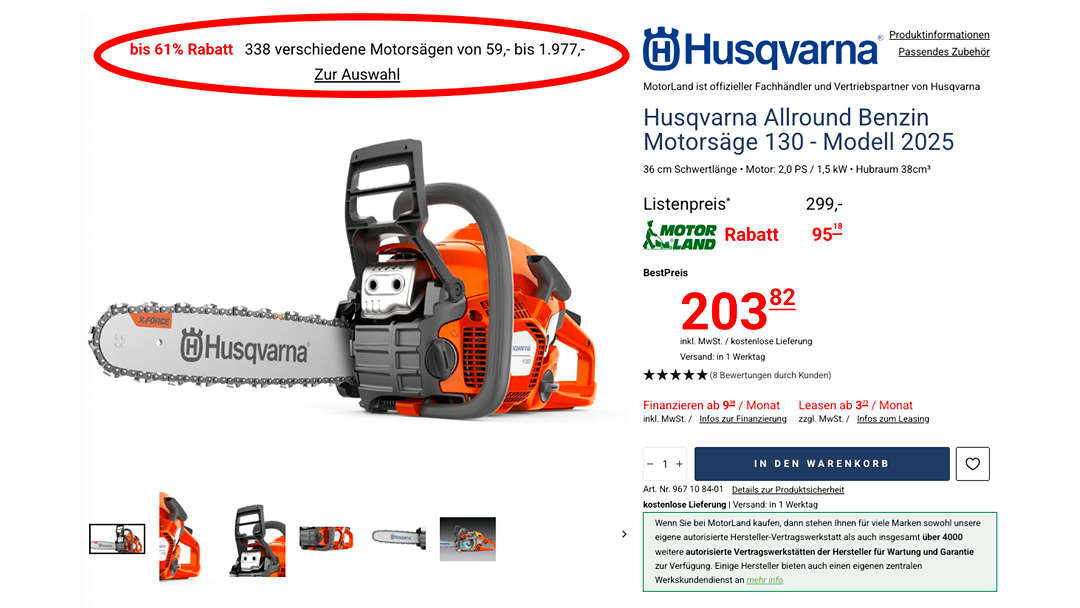
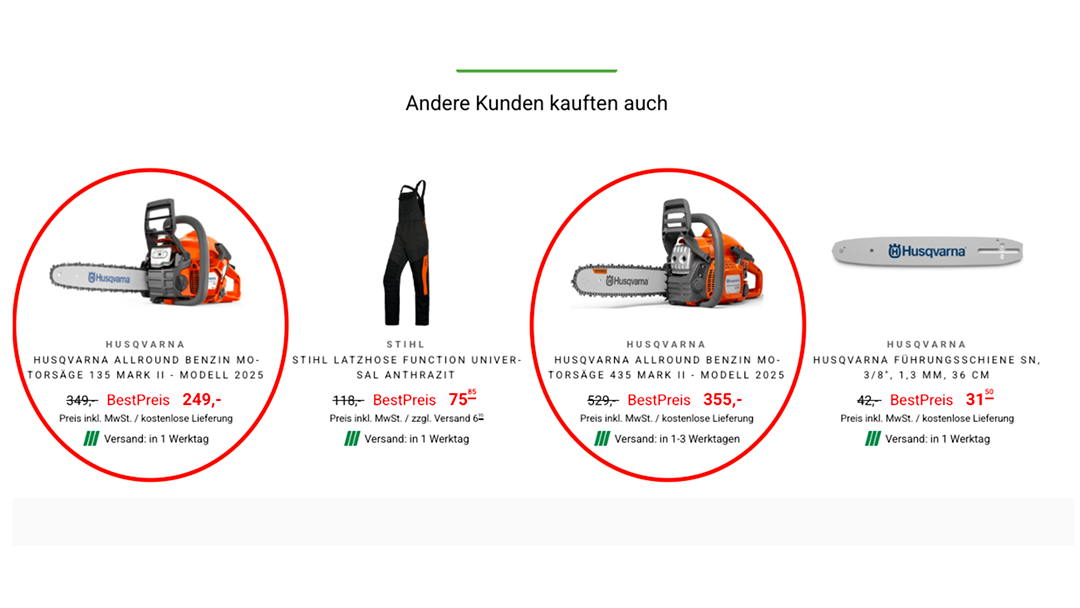
In online retail, upselling is implemented via product comparisons or upgrade options. The customer must therefore come across the upsell themselves and be able to select it, as there is no direct consultation. Common placements for upsell variants include:
- Comparison tables (Basic vs. Pro)
- Notices such as “Popular with customers: premium version”
- Crossed-out prices (“Now only CHF… for the top version”)
- Variant selection with recommendation of an upsell version
Upselling can be seen as part of conversion rate optimisation, because the customer is more drawn to a purchase when:
- the upsell product exceeds the original product requirements.
- the customer already feels emotionally connected to “their” product because they put together the upsell options themselves.
At Axisbits, we know from the experience of numerous e-commerce and shop projects that placing upsell opportunities and conversion rate optimisation can be very detailed and time-consuming, but equally lucrative.
When your shop’s performance consistently falls below your expectations and you are sure that more should be possible, a neutral outside perspective may help. Get in touch and we’ll show you how we approach optimising your site’s conversion rate.
{{fs-btn-cta}}
Wir schaffen leistungsstarke Plattformen und Websites für Startups, Scale-Ups und KMUs, von Konzept bis Go-Live.
We systematically increase your conversion rate with A/B testing and proven UX optimization — month by month!
Upselling — common questions and answers
No, honest upselling lets customers know that there are better options for their needs and wishes. It must not be conveyed as a compulsion, but as a service concept.
In consulting-intensive industries, for technical products, software licenses, insurance or services with various levels of performance.
In the shop, you can create product variants as your own items and then carry out A/B tests with the “recommended variant.” A feature comparison as a clickable table can also be integrated and thus have an effect on the upsell.
More articles

Many teams experience Sprint Planning in one of two extreme ways: either as an endless meeting that drags on for three hours and still provides no clarity, or merely as a ticket-shuffling exercise in Jira that could just as easily have been handled via email. Neither of these approaches aligns with the true purpose of Sprint Planning.

According to the swissICT Digital Excellence Report, only 35 percent of Swiss companies are on track with their digital alignment. For 26 percent, there is significant need for action (Source: swissICT). Companies invest in tools, cloud services, and AI pilot projects without a plan that holds it all together. The result: fragmented system landscapes, duplicated work, and budgets that don't flow where they have the most impact. The right IT strategy is the answer to this.

Artificial intelligence is now an established tool in software development, integrated directly into the programming environment. Developers spend less time writing boilerplate code and can instead focus on how the different parts of an application logically interact.