Understanding digitization and taking the first steps
For some, the word digitization is already so worn out that it is taking on a buzzword character. For others, it is still meaningless and intangible. In this article, we want to shed light on digitization and use examples to show what it really is all about.

What is digitization?
In the past, you would write names, addresses, birthdays and telephone numbers in a booklet and later search out the entries by hand as soon as you needed them. Today, all this information is stored in the smartphone's contact directory. Searched entries can be found in seconds. Digitalization is simply explained.
Digitalization means changing things from “analog” to “digital.” This can mean transferring paper documents to software, interconnecting machines, or developing completely new digital products. The aim is to make processes easier, faster and often cheaper.
Example of digitization:
The receipt, which used to be printed and then ended up in your wallet or jacket pocket, is now often available digitally and can be viewed in the app. Migros is already using e-receipts in Switzerland.

What is it intended to achieve? (advantages of digitization)
Digitalization is not an end in itself. It is not a question of methodically bringing all conceivable processes to the digital level. Rather, the focus is on the added value of no longer having to carry out certain processes manually:
- Eliminate time wasters: Many tasks are carried out manually over and over again — this takes a lot of time. Digital solutions do this work and create space for more important things.
- Uncover cost drivers: Anyone who converts processes to digital quickly recognizes where money is being wasted — whether through paper files, cumbersome processes or unnecessary storage space.
- Learn from data: Digital processes automatically provide facts and figures. These can be used to identify patterns, improve processes or even develop new business ideas.
- Become more resilient: A company that doesn't constantly struggle with inefficient processes can adapt more quickly — whether to market changes, new customer needs, or sudden challenges.
Well-known examples of digitization to illustrate
- E-commerce (online stores): In the past, you could only shop in stores, today you click through a website and buy worldwide.
- Cloud services: Instead of running expensive servers in your own company building, you use on-demand storage capacity and computing power via the Internet.
- Smartphones & apps: A device replaces a camera, notepad, calendar, and more; apps add new features to an existing device.
- Video conferences: What required expensive technology a few years ago is now part of everyday life in many companies. Remote work is therefore possible.
- Production lines in factories: With sensors and automated robots, it is possible to plan and control exactly which quantities will be produced and when.
Examples of digital products:
- streaming services replaced video and DVD rental.
- eBooks serve as a supplement to books. The lightweight readers and the ability to enlarge the text make books more barrier-free.
- Digital content for games: The games themselves are already digital, but additional content can be purchased without buying a new game CD or cartridge.
- Digital content for creative software such as brushes, templates, or paint sets.
Important terms you should know
- Digital transformation: The profound transformation of an entire company or industry through digitization.
- Cloud computing: IT services such as storage, computing power or software are provided via the Internet.
- Big data: Collection and analysis of large amounts of data to gain insights (for product development or marketing, for example).
- Artificial intelligence (AI): Self-learning algorithms that evaluate data, recognize patterns and make decisions automatically.
In connection with digitization, you will also come across abbreviations such as IoT (Internet of Things) and RPA (Robotic Process Automation). What may sound very big here has a tangible explanation: Ultimately, it is tools that can help implement digitization.

Industry 4.0 and digitization
The term Industry 4.0 is often referred to as the next stage of the industrial revolution. It is the fourth step in the chain of steam engine, electricity & assembly line work and the use of computers. The idea behind this is:
- Networking in production: Machines, products, people and systems communicate with each other.
- Real time data: Sensors provide continuous information on production status.
- automation: Robots and AI systems control large parts of production.
In short: Industry 4.0 is the term for digitization in industrial manufacturing. It is no longer just about new physical development steps, but about a completely networked value chain — from raw material procurement to the end product.
Industry 5.0 could mean the full use of artificial intelligence (AI) in a previously completely digitized industry. However, the world is still a few steps away from this and reaching for the next 'version number' too quickly is disputed.
Software as the core of digitization
At Axisbits, we see every day that the effort of digitization is worthwhile. It's the ones Companies that lead the competitionwho have objectively questioned, improved and finally digitized their processes.
Most recently, we were able to take over the development of the Vokus24 platform. Thanks to our software, over 400 healthcare facilities in Switzerland are now interconnected in a central emergency pool for nurses. You can find out more about this in our Portfolio entry for Vokus Personal AG.
{{fs-btn-custom}}
Wir schaffen leistungsstarke Plattformen und Websites für Startups, Scale-Ups und KMUs, von Konzept bis Go-Live.
We'll show you options for your start-up, scale-up or SME that you can start with right away.
Digitalization — Frequently asked questions and answers
Digitalization means turning analog processes into digital ones. The aim is to simplify and automate processes and create new opportunities.
Software is the central tool that automates processes and makes data usable.
It depends on the size. In many cases, investments pay off quickly through saved time and resources.
The first step is to analyze existing processes and improve them. The processes can then be upgraded to the digital level.
Many manual tasks are increasingly being omitted or automated. At the same time, new job profiles are being created that require digital know-how.
Yes, because without a clear strategy, digitization often remains inefficient. Even if the work itself cannot be digitized — as in the craft sector — at least administrative tasks can be made easier.
More articles
Business Process Management (BPM) is the structured control of business processes through modeling, automation, measurement and optimization. The EU rules DORA and NIS2 reach Swiss companies too, by way of their supply chains.
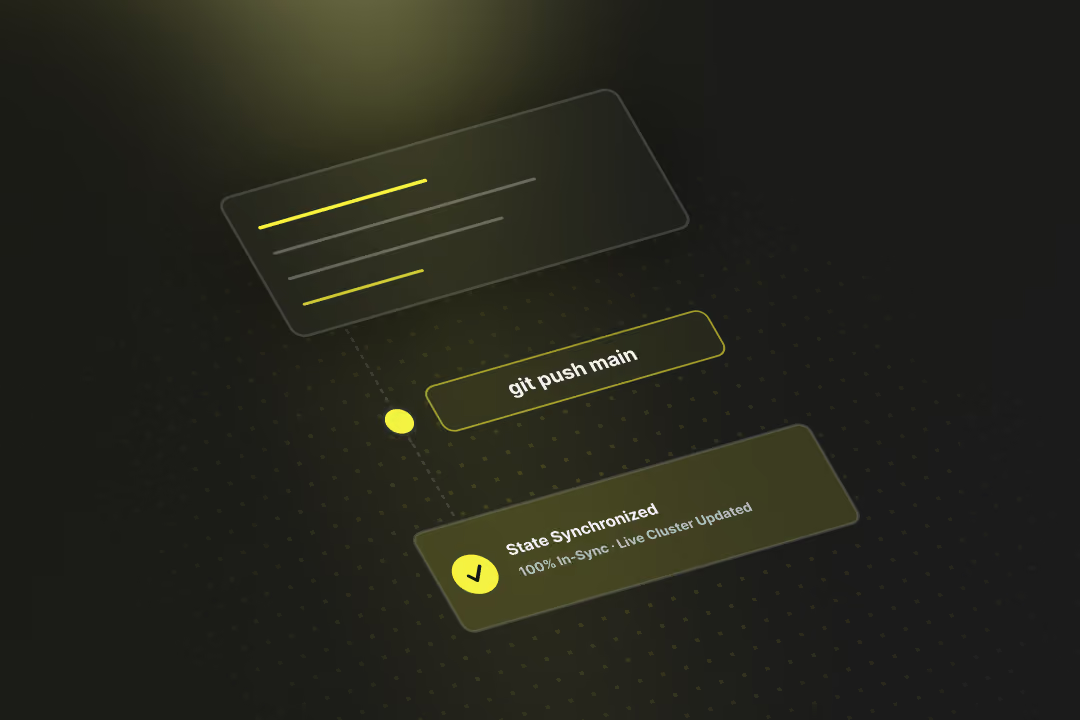
Software deployment is the process that moves finished code out of the development environment and into live production. GitOps, Progressive Delivery and DevSecOps make releases faster and safer. At the same time, the revDSG and even EU regulations reach into Swiss pipelines.
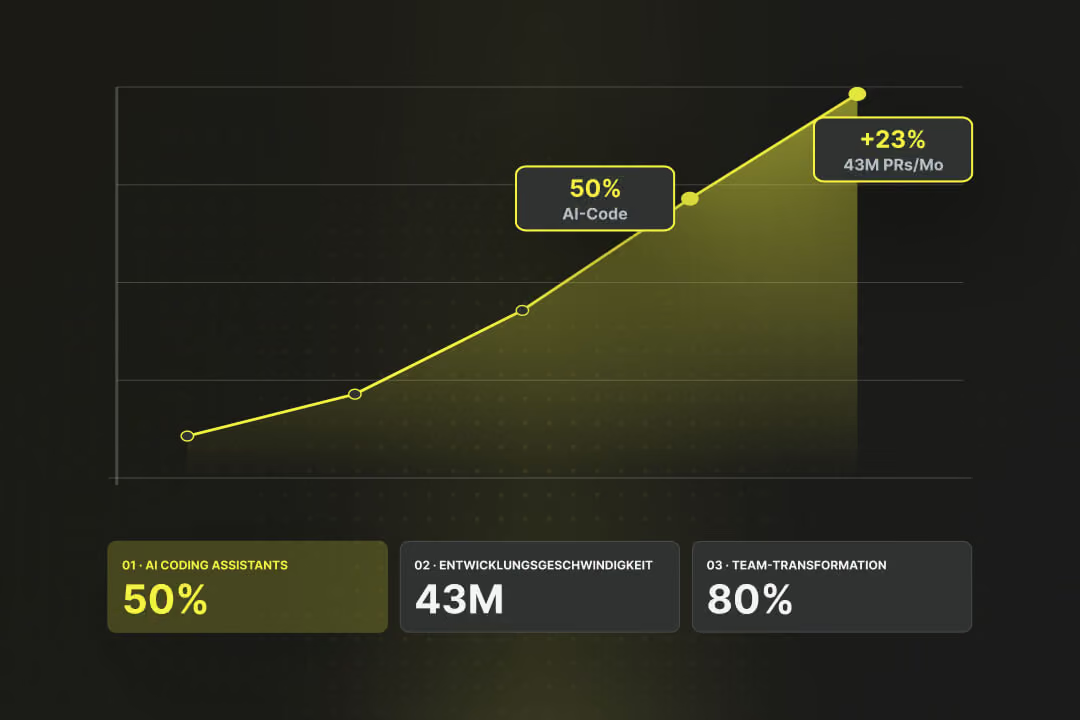
By the end of 2025, almost half of all code on GitHub was generated using AI tools, according to EY Switzerland. Each month, 43 million pull requests were merged, a 23% year-over-year increase (Source: EY Switzerland). Gartner predicts that by 2030, AI-native development platforms will lead to 80% of organizations transforming large developer teams into smaller, AI-augmented units (Source: Gartner). Software development is changing faster than ever before. We highlight the trends that truly matter in 2026, what's driving them, and what this specifically means for businesses.