The costs of platform development
The plan to have a platform developed raises many questions about costs. The absolute price is just as important as the individual costs for the development steps. In order to give you a good idea of the price, we will explain to you in this article how the costs of platform development are made up and show specific examples.


Composition of platform development costs
There is only one correct answer to the question of how much a car costs: It depends. We want to be much more specific here and first show you which individual components make up the total price of platform development.
1. Project scope and complexity
- Functionality: The more features your platform should offer, the higher the development effort. Simple platforms with basic features are less expensive than complex systems with a larger scope.
- User roles: The number and variety of user roles (e.g. administrators, end users, moderators) influence the complexity of the platform and thus also the development effort and price.
2. Technology selection
- Programming languages and frameworks: The choice of technology significantly influences development time and costs.
- Third party integrations: The integration of external services, such as payment providers or CRM systems, can mean additional effort.
3. Design requirements
- User interface (UI): An appealing and intuitive design requires careful planning and implementation.
- User experience (UX): A thoroughly positive user experience is the basis for customer satisfaction, but requires a certain amount of effort in the development phase.
4. Development team and location
- Experience and qualification: Software quality and price depend equally on the experience of the development team. If one is supposed to be low, it is inevitable that the other is too.
- Regional differences: Hourly rates vary depending on where the team is located. It is usually necessary to decide whether international communication is sufficient or whether the entire project support in the mother tongue is better.
Addition: Ongoing costs and maintenance of a platform
After initial development costs, current expenses for the platform must also be considered. These are not directly part of development. However, it is only fair to point them out:
- Hosting and server costs: These are initially rather low and increase with the number of hits on the platform and the traffic generated.
- Regular updates: These are for safety and functionality.
- Development: Over time, the demands placed on the platform grow — both from users and platform operators. Budget should therefore also be planned for continuous development.
Specific price ranges for various types of platforms
Examples of platform development by Axisbits
The following examples show which end product results from platform development. Here you can find a communication platform and a learning platform. All other projects are in our portfolio to find.
{{fs-cases-list}}
If you already have a specific project idea for your platform and would like advice on the costs, get in touch with us. The better we understand your idea, the more specific the statements about the price can be made.
{{fs-btn-cta}}
Wir schaffen leistungsstarke Plattformen und Websites für Startups, Scale-Ups und KMUs, von Konzept bis Go-Live.
We develop powerful platforms and websites for start-ups, scale-ups and SMEs, from concept to go-live
Platform Development Costs — Common Questions and Answers
Costs vary depending on scope and complexity. Simple platforms as MVP start at around CHF 50,000. Complex projects can cost up to CHF 300,000 or more.
The main factors are the range of functions, the choice of technology, the design and the size of the development team. Ongoing maintenance costs should also be taken into account.
Development time depends on complexity. Simple platforms take 3—6 months. Complex projects can sometimes spend a year in development.
Pay attention to experience, reference projects and honest communication. An experienced and self-confident agency will always try to understand your vision in the best possible way in order to be able to make a reliable statement about the costs.
More articles
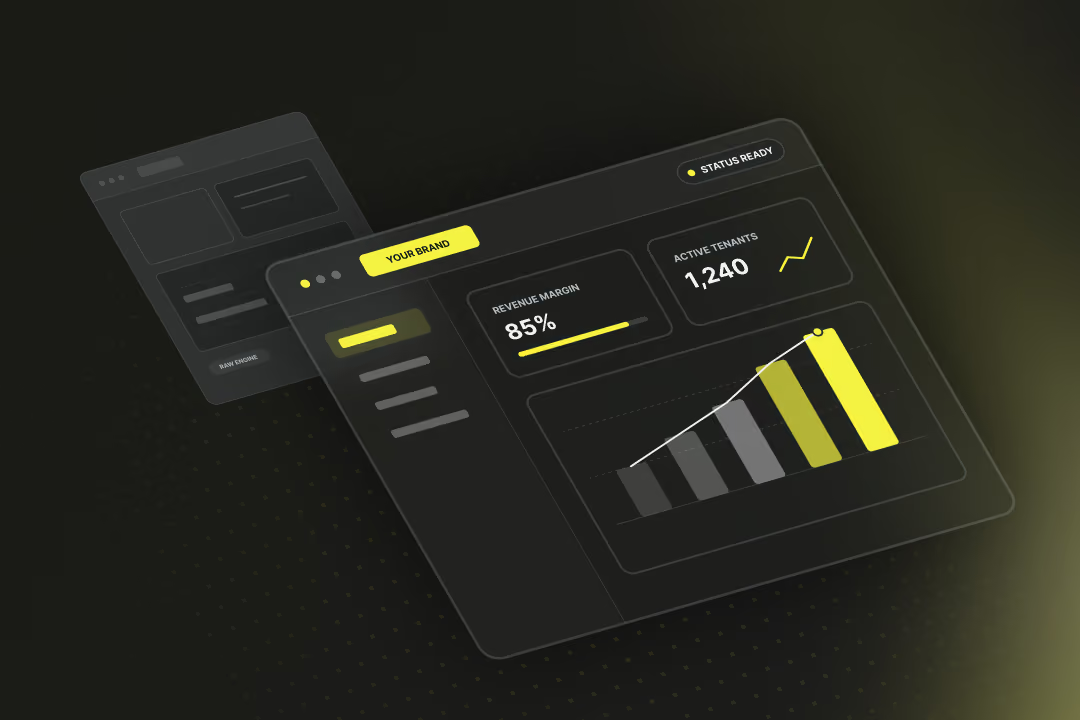
White label software refers to fully developed software that you license, brand and sell to end customers under your own brand name, without programming it yourself. For SMEs and agencies, this model can be a fast route to market.
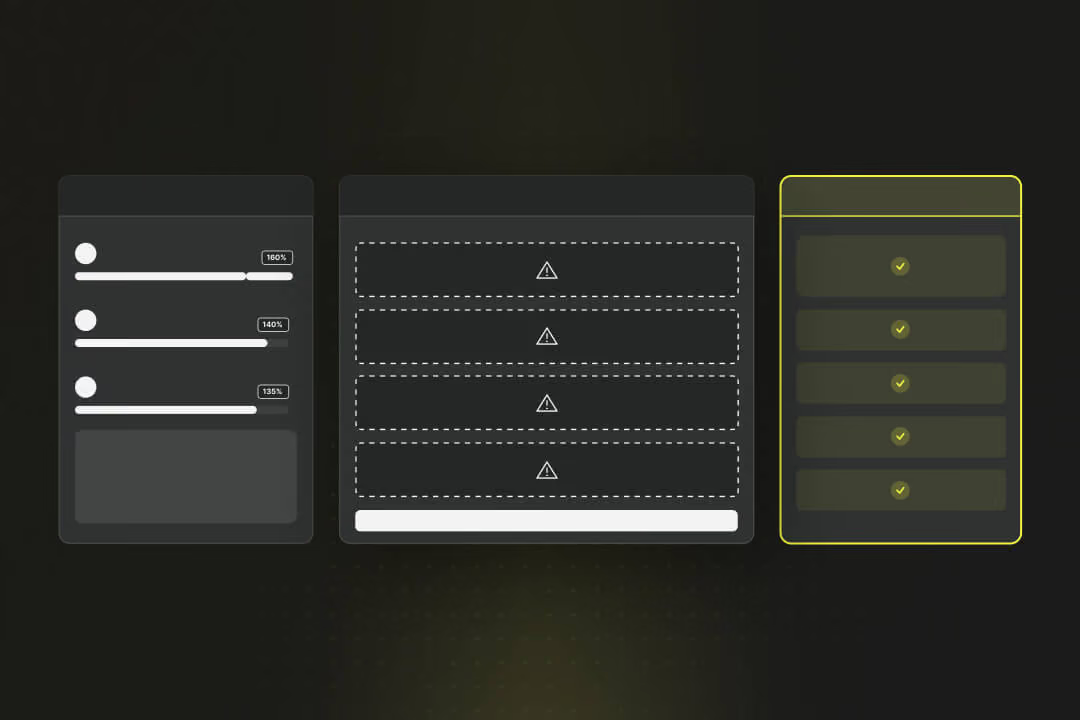
Platform Engineering alleviates the burden on developer teams who, in addition to coding, often have to manage the entire configuration of cloud systems and security pipelines. By building an Internal Developer Platform (IDP), you equip your team with self-service capabilities that make databases or servers available at the push of a button.
.avif)
A prototype is a simplified, partially functional model of a product or software. It is used to test certain characteristics such as usability, function, form, or technology before the final version is developed or produced. A prototype is therefore a validation tool. It forms the basis for verifying assumptions about user behavior, technical feasibility, or market acceptance before a project moves into the often costly implementation phase.