Process optimization explained simply: Methods and tools for Switzerland
Prozessoptimierung bezeichnet die gezielte Verbesserung von Arbeits- und Informationsabläufen innerhalb eines Unternehmens. Dabei werden zum Beispiel Freigabewege verkürzt, redundante Datenerfassungen eliminiert und technische Übergaben zwischen Systemen stabilisiert, um den Gesamtprozess messbar zu beschleunigen.

Process optimization: The most important things in brief
- Objective of process optimization: Processes are adapted in such a way that they deliver a stable result with less effort, measurable in terms of time, quality and costs per process.
- Process optimization process: You analyse the current process, implement targeted measures, check the impact and standardize successful changes (PDCA principle).
- Process optimization methods: Lean, Six Sigma, Kaizen, PDCA and BPR are the most common approaches, chosen according to problem type and process maturity.
- Technology: tools such as process mining, iPaaS platforms, RPA software, and HubSpot workflows assist with analysis, automation and monitoring.
- Law & quality of process optimization: Data protection only becomes relevant when personal data is processed. ISO 9001:2015 + Amd. 1:2024 is the reference framework for quality management.
How does process optimization work?
Process optimization consists of four steps: recording the process, implementing improvement measures, measuring the impact and introducing effective changes permanently.
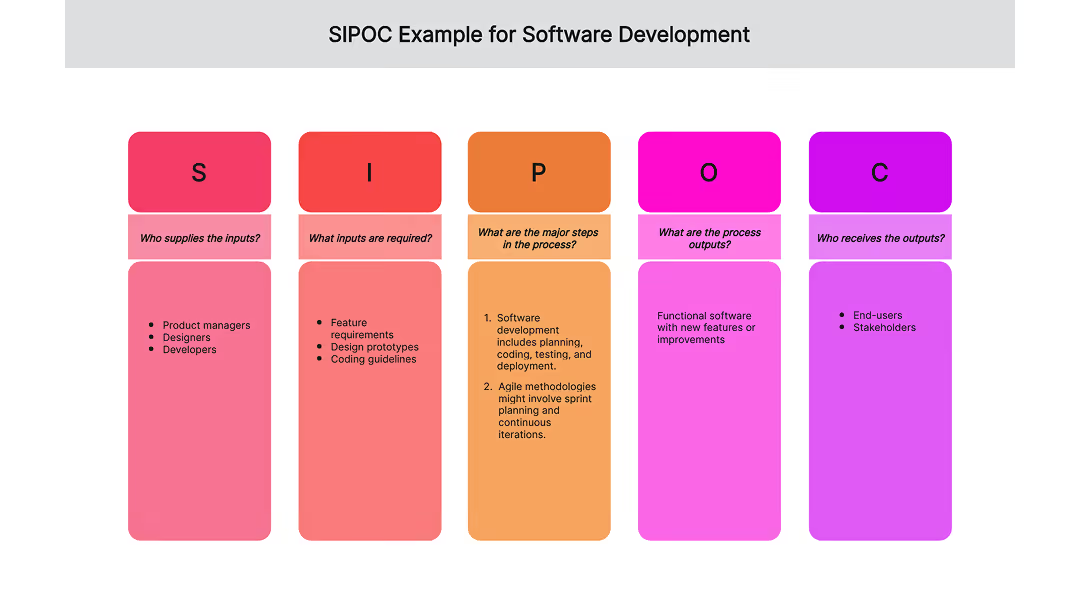
At the beginning, you document your existing process. To do this, create an overview of all work steps, decision points and information flows, for example with a SIPOC diagram that shows suppliers, inputs, process steps, expenses and internal or external customers. This allows you to see where there are delays, duplicate data collection, or unnecessary dependencies.
Based on this analysis, you can set target values:
- A shorter processing time per order
- Fewer manual approvals in purchasing
- A lower error rate in data sets.
After that, you bet first measures to: Remove unnecessary verification steps, automate recurring tasks, and assign responsibilities.
Afterwards Are you checking the results with measurable key figures such as processing time, percentage of error-free expenditure or process costs per process. If there is a stable improvement, you document the new processes, train the employees involved and make the changes binding in this way.
This process corresponds to the PDCA model (Plan, Do, Check, Act) and forms the basis for a comprehensible and repeatable improvement.
Which methods are used in process optimization?
There are various methods available for process optimization. Which you use depends on whether you want to gradually improve processes or fundamentally redesign them.
- Lean Management: reduces unnecessary work steps and waiting times. The aim is a clearly structured process with minimal handovers.
- Six Sigma (DMAIC model): Eliminates causes of errors based on measurement data. The five phases Define, Measure, Analyze, Improve, Control take you from problem definition to stable improvement.
- Kaizen/Continuous Improvement Process (KVP): relies on small, regular adjustments by employees. Particularly suitable for standardized routine processes.
- Business Process Reengineering (BPR): completely questions processes and develops them anew when existing structures are no longer sufficient.
- Total Quality Management (TQM): focuses the entire organization on quality and combines optimization with leadership and strategy.
- PDCA cycle (Plan-Do-Check-Act): describes the course of a continuous improvement process and serves as a framework for many other methods.
- 5S method: ensures order and standardization in the workplace: sorting, systematizing, cleaning, standardizing, self-discipline.
- Value Stream Mapping (VSM): visualizes the flow of material and information to identify bottlenecks and idling.
- Ishikawa diagram: helps to systematically identify causes of errors or delays.
- SIPOC model: summarizes suppliers, inputs, process steps, expenses and customers in an overview.
- Makigami method: analyses office and service processes to make media breaks or waiting times visible.
- DADIS model: structures administrative processes in five phases: documenting, analyzing, defining, implementing, stabilizing.
Which method suits which goal?
What software for process optimization is available?
Depending on your goal, you'll need tools for analysis, automation, or monitoring. They show where a process is stalling and help you to reliably control and improve processes.
If you want to digitize processes, you usually start with visualization and automation. Combine tools for extensive processes:
Process mining for analysis, iPaaS for integrations, RPA for manual work steps and CRM workflows for operational management.
CRM and workflow systems
- With workflows, HubSpot provides and custom code actions flexible process logic, for example for lead routing, data synchronization or ticket processing.
- About webhooks You can trigger external actions, such as creating a project in an ERP or support system.
- The data hub and the data quality functions check data for completeness and consistency.
Analytical tools
- Process mining platforms such as Celonis, SAP Signavio, Microsoft Process Mining or UiPath Process Mining reconstruct real processes from system data. This is how you identify bottlenecks, loops and waiting times.
- visualization tools such as Miro, Lucidchart, or Draw.io help you create flow charts, SIPoC overviews, or value stream representations.
automation tools
- iPaaS platforms such as Workato, Make, Zapier or n8n connect applications together and automate data flows across system boundaries.
- RPA solutions such as UiPath or Microsoft Power Automate Desktop automate recurring click sequences in existing programs, particularly with older systems without interfaces.
- AI agents assist with recurring tasks such as request categorization or provision of knowledge.
Monitoring and control tools
- Business intelligence systems such as Power BI or Google Looker Studio, visualize KPIs such as processing times, error rates, or throughput.
HubSpot dashboards or ERP systems are used for continuous monitoring and help you identify deviations early on.
Tip: Here you can find out what HubSpot Is and how Salesforce versus HubSpot cuts off.
How can I use HubSpot for process automation?
In HubSpot, you primarily automate Sales, marketing and service processes. Workflows, webhooks, custom code, and AI functions are available for this purpose.
HubSpot is particularly suitable for processes that are directly linked to Customer or contact details are connected. It allows you to automate repetitive tasks, control data synchronizations, and trigger cross-system actions.
- Workflows: Create, update, or forward data sets based on defined triggers, such as new leads, ticket status changes, or deal updates.
- Custom Code Actions: Add custom logic to JavaScript to calculate, transform, or interact with external APIs.
- Web hooks: Send structured data to other systems, for example for project creation, invoice generation or ERP updates.
- Data hub and data quality: Synchronize data across multiple systems and automatically clean it to avoid duplicates and format errors.
- AI agents: Automate support processes, classify inquiries, or help you create and maintain knowledge articles.
Typical use cases of HubSpot for process automation:
- Automatic Assigning new leads to the responsible sales representative.
- Refresh the customer statusas soon as an offer is accepted.
- Create a Support tickets from a form or chat.
- validating and formatting contact detailsbefore they are transferred to an ERP system.
However, HubSpot is not a complete business process management system. When you complex, cross-divisional processes If you want to control, you combine it with iPaaS software such as Make or an RPA solution, i.e. click automation without an API. HubSpot acts as a data and event hub and external tools take over the technical orchestration.
We at Axisbits have been working with HubSpot ourselves for years and are now official HubSpot partner for Switzerland. Do you want your team to be able to get started quickly with HubSpot or optimize existing processes? Then get in touch with us!
{{fs-btn-cta}}
What do I have to consider about data protection when optimizing a process?
Process optimizations are becoming legally relevant only when personal data is processed or be passed on. In this case, the revised Data Protection Act (RevDSG) and, if EU data is affected, the GDPR apply.
If you optimize processes that relate exclusively to technical or internal processes, you must do not take into account data protection requirements. This applies, for example, to processes such as status changes in a system, automated checks of server states or internal notifications without personal reference.
However, as soon as personal data, i.e. information that can be assigned to a specific person, is processed, transmitted or evaluated, the RevDSG rules. If your processes also involve data from EU citizens, you must also comply with the General Data Protection Regulation (GDPR). In these cases, check and document the following points:
- Check data content: Record whether your process includes names, email addresses, customer numbers, or similar identifiers. For such processes, you keep a list of processing activities.
- Documenting system location: Note where data is stored. HubSpot hosts customer data in the EU (Germany or Ireland), Power Automate in your client's Microsoft region. With self-operated systems such as n8n or Camunda, you can determine the storage location yourself.
- Access rights and logging: Use role-based permissions so that only authorized people can adjust processes. Activate logs that record the start, duration, and outcome of a process. If no export is possible, forward events to a monitoring system via API or webhook.
- Data transfer abroad: When data arrives in a country without equivalent levels of data protection, standard contractual clauses or other guarantees are required. The Swiss-US Data Privacy Framework (DPF) applies to the USA, provided that the provider is certified there.
- Check out AI features: If you use AI-powered steps, regularly review their results and purpose allocation. Since August 2025, the EU AI Act has included initial obligations for the traceability and documentation of such systems.
- Ensuring information security: Comply with standards such as ISO 27001:2022. Verify that your access, backup, and emergency management policies meet these requirements.
ISO standards for process quality
Regardless of data protection, ISO 9001:2015 plus Amendment 1:2024 is the international standard for quality management and continuous process improvement. A new version is expected to be published in the course of 2026. If you want to document or audit your improvements, you can use this standard as a guide.
Wir schaffen leistungsstarke Plattformen und Websites für Startups, Scale-Ups und KMUs, von Konzept bis Go-Live.
We are a partner and official HubSpot Solution Provider, set up your HubSpot setup and get your team up and running quickly!
Process optimization — frequently asked questions and answers
A process is in need of improvement if it regularly causes delays, inquiries or duplication of work. This can be measured using key figures such as throughput time or error rate. As soon as these deviate from target values, there is potential for optimization.
Automation is worthwhile for recurring, rule-based processes with stable data. Processes with a high level of individual review or frequent exceptions are better left manual in order to ensure quality.
Optimization improves the content of the process, digitization replaces manual tasks with digital tools. In practice, the two are combined: first optimize, then digitize.
Start with a simple overview of your main processes. Describe inputs and expenses, responsible persons and interfaces. A SIPOC diagram is sufficient as a starting point
AI can identify patterns in process data, predict bottlenecks, and automate routine decisions. However, it does not replace technical analysis, but rather expands it with data-based insights.
More articles

Business Process Management (BPM) is the structured control of business processes through modeling, automation, measurement and optimization. The EU rules DORA and NIS2 reach Swiss companies too, by way of their supply chains.
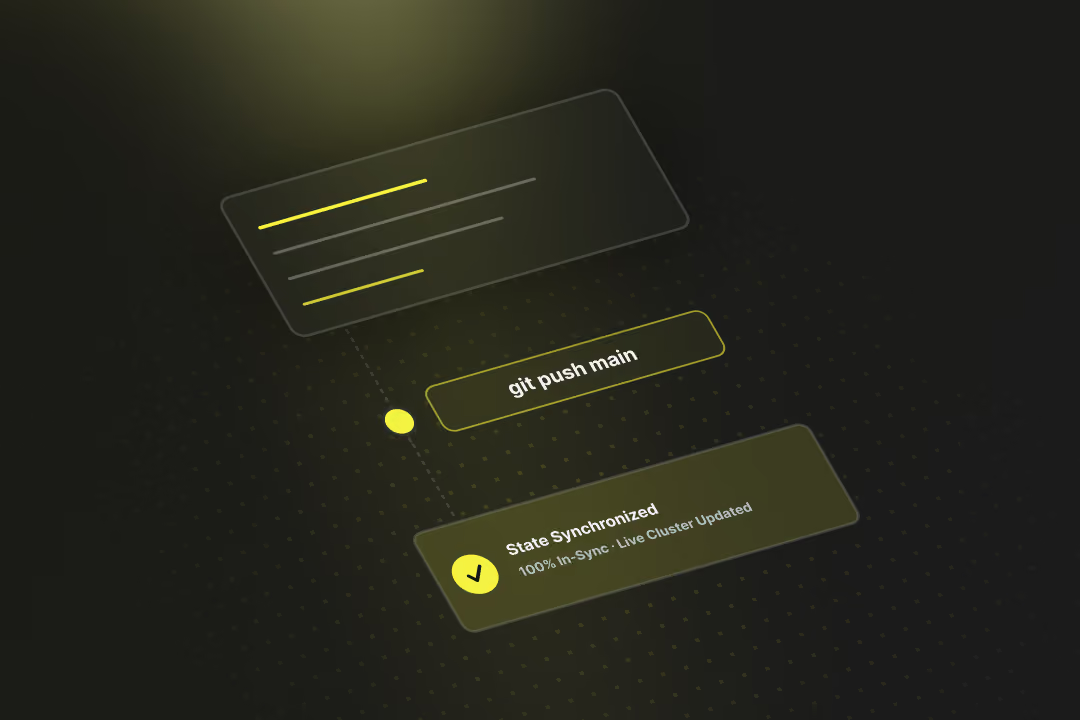
Software deployment is the process that moves finished code out of the development environment and into live production. GitOps, Progressive Delivery and DevSecOps make releases faster and safer. At the same time, the revDSG and even EU regulations reach into Swiss pipelines.
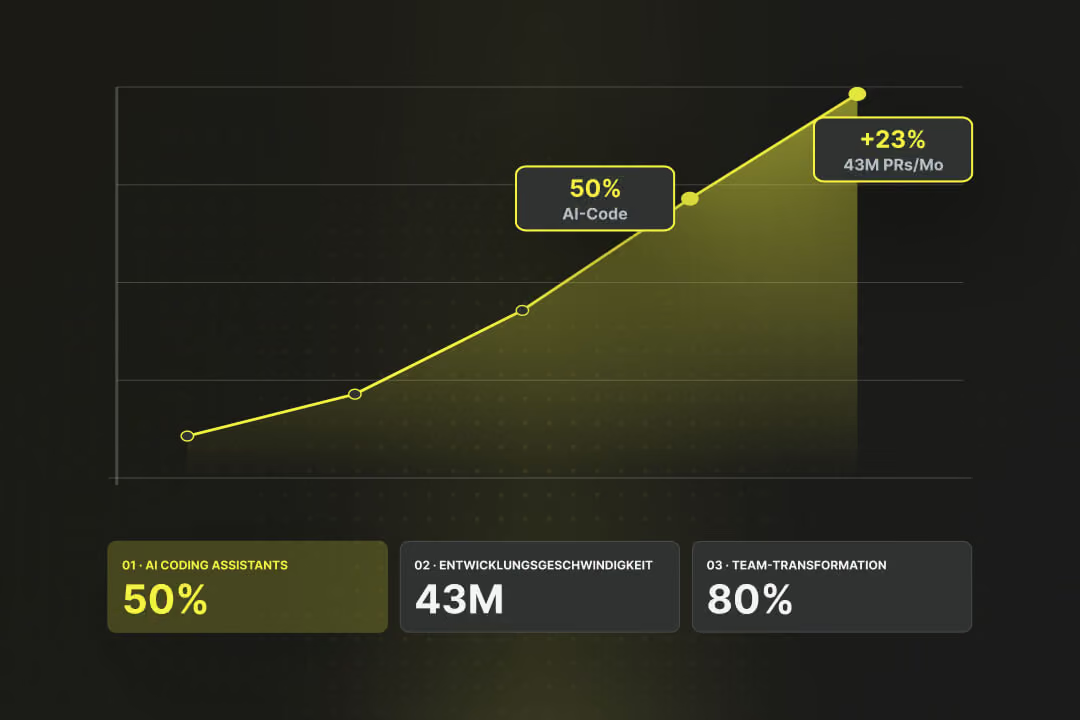
By the end of 2025, almost half of all code on GitHub was generated using AI tools, according to EY Switzerland. Each month, 43 million pull requests were merged, a 23% year-over-year increase (Source: EY Switzerland). Gartner predicts that by 2030, AI-native development platforms will lead to 80% of organizations transforming large developer teams into smaller, AI-augmented units (Source: Gartner). Software development is changing faster than ever before. We highlight the trends that truly matter in 2026, what's driving them, and what this specifically means for businesses.